
How to Prioritize Lease Due Diligence Findings Fast

Multifamily lease due diligence often produces more findings than teams can realistically review line by line before a deal deadline.
Some findings affect underwriting immediately.
Others are operational cleanup items.
The problem is that many acquisition teams treat findings the same way. That slows decision-making. It makes it harder to identify what actually matters.
A stronger lease review process ranks findings by:
- underwriting impact
- probability of being real
- fix effort
- portfolio pattern
- timing urgency
This helps acquisitions and asset management teams move faster toward a confident go or no-go decision.
For broader diligence workflow context, see how to scale multifamily lease due diligence in 2026 →

Why Prioritization Matters in Multifamily Lease Due Diligence
Large multifamily acquisitions can surface hundreds of lease-level exceptions.
Examples include:
- rent mismatches
- missing fees
- concession errors
- incomplete lease files
- renewal discrepancies
- ledger inconsistencies
Not every issue deserves the same response.
A missing signature on one low-risk file is different from a recurring underbilling issue across 200 units.
Without prioritization, teams waste time on low-impact findings while hidden risk identification becomes harder. That delay can affect investment decisions during compressed deal timelines.
Tracking critical dates is essential. Earnest money due, due diligence period, financing contingency, and closing date all need attention.
But tracking alone is not enough. Multi-Housing News reports that the key to closing multifamily transactions is anticipating problems early. Compressed timelines leave teams with no options once issues escalate.
Step 1: Group Findings by Risk Category
Start by organizing findings into clear categories.
Common categories include:
- rent and billing discrepancies
- concession issues
- missing ancillary charges
- incomplete documentation
- renewal mismatches
- ledger or rent roll conflicts
- compliance exceptions
This creates structure before ranking begins. It also helps teams see which categories of red flags are showing up most often.
For related risk categories, see 11 hidden lease due diligence risks to check in 2026 →
Step 2: Score Underwriting Impact
The first filter should be financial impact.
Ask:
- Does this finding change projected revenue?
- Does it affect NOI?
- Does it change the rent roll quality?
- Could it affect valuation or price negotiation?
High-impact findings often include:
- recurring rent underbilling
- concessions not reflected correctly
- missing recurring charges
- delinquency exposure
- inconsistent lease terms across many units
These should move to the top of the review queue. Strong scoring also supports a more reliable risk assessment when interest rates and market conditions tighten margins.
Step 3: Estimate Probability
Not every finding is equally reliable.
Some exceptions are clear. Others require confirmation.
Rank probability as:
High probability. The document and system data clearly conflict.
Medium probability. The issue appears likely but requires reviewer confirmation.
Low probability. The finding may be caused by incomplete records or formatting issues.
This prevents teams from overreacting to uncertain findings.
Step 4: Evaluate Fix Effort
Some issues are easy to correct.
Others require legal review, resident communication, system updates, or post-close planning.
Rank fix effort as:
- low effort
- medium effort
- high effort
A high-impact, low-effort issue should be addressed quickly.
A high-impact, high-effort issue may need negotiation, escrow consideration, or post-close mitigation planning.
Step 5: Identify Portfolio-Wide Patterns
One-off findings matter less than repeatable patterns.
A single missing parking fee may be isolated. But the same missing fee across multiple properties may signal a broader operational issue across the multifamily property portfolio.
Look for patterns by:
- property
- unit type
- lease template
- fee category
- management team
- acquisition batch
Pattern recognition is essential in large-scale due diligence management.
Step 6: Separate Deal Risks From Cleanup Items
A practical triage model separates findings into three groups.
Deal-critical findings. These may affect pricing, underwriting, or go/no-go decisions.
Negotiation findings. These may support price adjustments, credits, or closing conditions.
Post-close cleanup items. These should be tracked but may not affect the transaction decision.
This keeps multifamily acquisitions workflows focused on decision-making, not just issue collection.
Step 7: Build a Triage Matrix
Use a simple scoring model:
Finding Type |
Impact |
Probability |
Fix Effort |
Priority |
|---|---|---|---|---|
| Missing recurring fee across many units | High | High | Medium | Critical |
| Single unsigned addendum | Low | High | Low | Low |
| Rent roll mismatch on multiple renewals | High | Medium | Medium | High |
| Expired concession still active | High | High | Low | Critical |
This turns tenant lease audit findings into a clear action framework. It also serves as a working due diligence checklist that teams can apply across deals.
Step 8: Route Findings to the Right Team
Different findings require different owners.
Examples:
- rent discrepancies → acquisitions / asset management
- document gaps → legal / compliance
- ledger issues → accounting
- PMS mismatches → operations
- concession risks → underwriting
Clear ownership prevents findings from sitting unresolved.
Traditional financial and risk-focused due diligence is no longer enough in a competitive M&A market. Dealmakers must identify value-creation opportunities while managing risk.
According to EY, integrated, data-driven due diligence works best. Prioritizing findings by financial impact, operational risk, and fix complexity gives teams a more complete view of the transaction. It helps them unlock value and move forward with confidence.
Why Findings Cannot Be Reviewed Equally
When teams treat every finding the same way, they slow down their own decision-making.
The strongest acquisition teams apply triage in real time as exceptions appear. They prioritize what affects long term value. They surface what affects pricing now. And they queue cleanup items for post-close work without letting them block the deal.
Exception-based workflows make this easier to scale. For a deeper view, see exception-based lease due diligence for large deals →
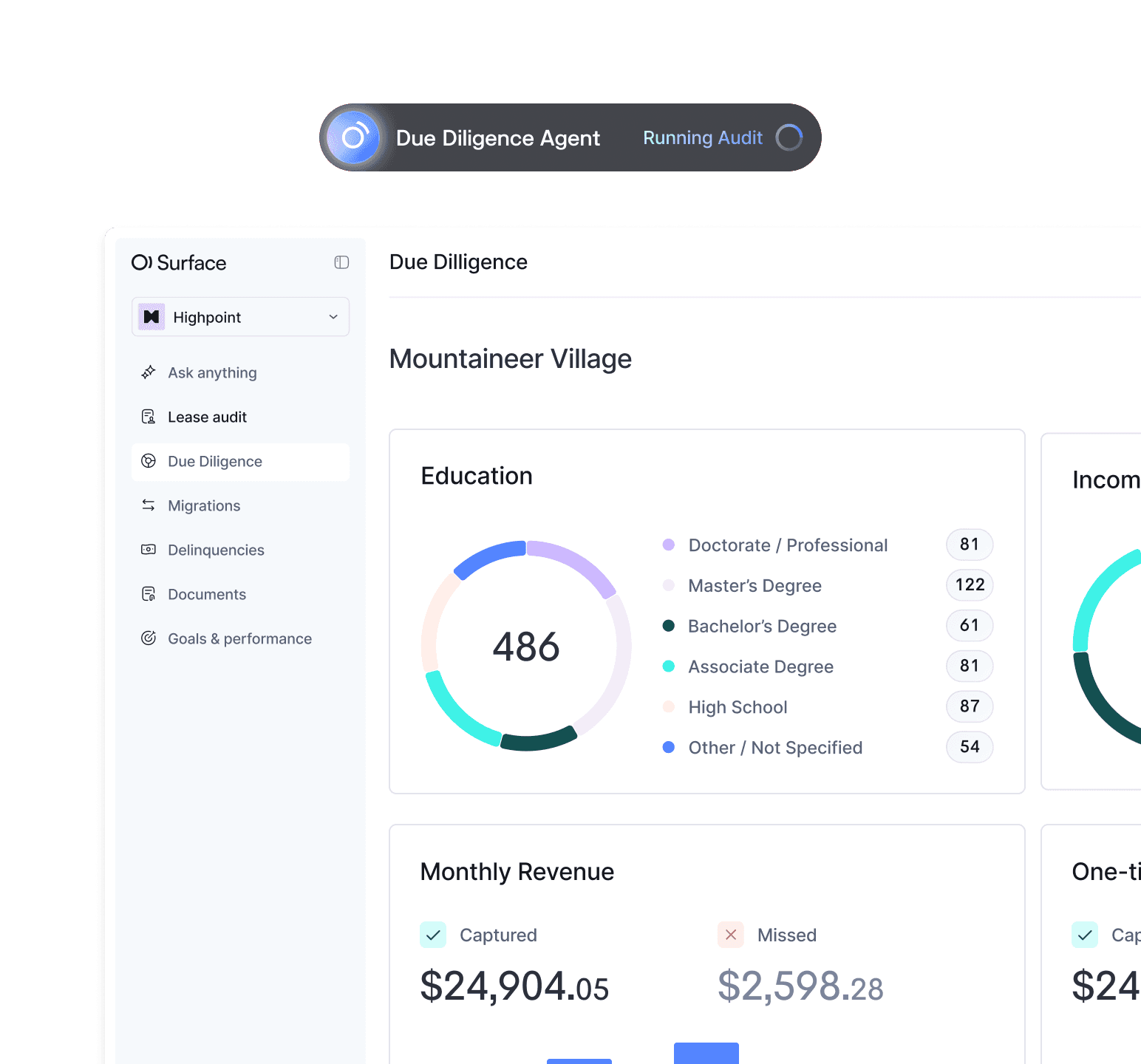
Where SurfaceAI Fits in Prioritization
SurfaceAI supports multifamily lease due diligence by helping teams move from raw exceptions to structured review.
SurfaceAI can help teams:
- analyze lease documents at scale
- compare lease data against rent rolls and ledgers
- surface discrepancies tied to revenue leakage
- support hidden risk identification
- prioritize exceptions for review
- improve confidence in real estate deal underwriting
This is especially useful when teams need to move quickly without relying only on manual sampling.
Teams that combine SurfaceAI with automated lease audit workflows and a structured hidden lease risk checklist get faster, more reliable diligence outcomes across large portfolios.
For related workflows, see AI lease due diligence platform evaluation criteria →

“The worst part of due diligence is doing the audits and SurfaceAI has taken that on”
Gary Robbins, Transitions Manager
How Triage Supports Better Investment Decisions
Conducting due diligence well is not about volume of review. It is about making informed decisions on the items that matter.
A strong triage process helps acquisition teams:
- identify red flags that affect price
- separate deal-breakers from cleanup items
- spot portfolio-wide operational risks
- manage risk exposure before closing
- mitigate risks tied to lease term, billing, or documentation issues
This becomes more valuable as deal sizes grow and supply chain pressure on operating costs increases.
Key Takeaway
The goal of multifamily lease due diligence is not to create the longest possible list of findings.
It is to identify which findings matter most.
A strong triage method helps teams rank issues by underwriting impact, probability, and fix effort. That focus helps them act on what affects the transaction.
Conclusion
Large multifamily acquisitions create too much lease-level data for unstructured review.
Teams need a prioritization framework that turns findings into decisions.
By grouping issues, scoring impact, estimating probability, and routing exceptions clearly, acquisition teams can move faster. They make better go/no-go calls. They also build a stronger record of financial records review and property conditions assessment for post-close operations.
If your team is looking to improve lease review prioritization, hidden risk identification, and large-scale diligence workflows, book a demo to see how SurfaceAI supports faster, more confident multifamily acquisitions.
Frequently Asked Questions About Prioritizing Lease Due Diligence Findings