
Exception-Based Lease Due Diligence for Large Deals

As multifamily acquisitions grow larger, traditional lease review workflows become increasingly difficult to scale.
Reviewing every lease line-by-line across hundreds or thousands of units is slow, expensive, and operationally inconsistent.
At the same time, acquisition teams cannot afford to miss hidden lease risks tied to:
- revenue leakage
- incorrect billing
- incomplete documentation
- concession exposure
- renewal discrepancies
This is why many institutional acquisitions teams are shifting toward exception-based lease due diligence.
Instead of treating every lease equally, teams prioritize review based on risk, discrepancies, and operational impact.
This guide explains how exception-based workflows work, how they improve large-scale lease review, and how multifamily acquisitions teams can reduce review time without sacrificing diligence quality.
For broader scaling workflows, see how to scale multifamily lease due diligence in 2026 →
What Is Exception-Based Lease Due Diligence?
Exception-based lease due diligence is a workflow where acquisitions teams focus detailed review efforts primarily on leases that trigger predefined risk conditions or discrepancies.
Instead of manually reviewing every lease equally, the system identifies:
- unusual lease terms
- data mismatches
- compliance gaps
- missing charges
- incomplete documentation
- operational inconsistencies
This allows teams to prioritize the leases most likely to affect underwriting, NOI, or post-close operations across a multifamily property.
Why Traditional Lease Review Breaks at Scale
In smaller acquisitions, manual review may still be manageable.
In large multifamily acquisitions, teams often face:
- thousands of lease documents
- compressed diligence timelines
- multiple PMS exports
- inconsistent lease templates
- fragmented operational records
Traditional review methods create several problems:
- reviewer fatigue
- inconsistent diligence quality
- delayed findings
- operational blind spots
- excessive review costs
As portfolio size increases, these issues compound quickly.
The pace of multifamily acquisitions has accelerated. Deloitte’s 2026 Commercial Real Estate Outlook reports significant CRE dry powder poised for deployment. Dealmakers who move faster with greater accuracy are winning more deals. AI tools are accelerating underwriting and risk assessment in large transactions.
What Exception-Based Workflows Actually Solve
Exception-based workflows improve efficiency by helping teams:
- identify high-risk units faster
- prioritize material discrepancies
- reduce repetitive manual review
- standardize the lease audit process
- scale large-scale lease review more consistently
The goal is not reducing diligence quality. The goal is directing human review where it creates the most value.
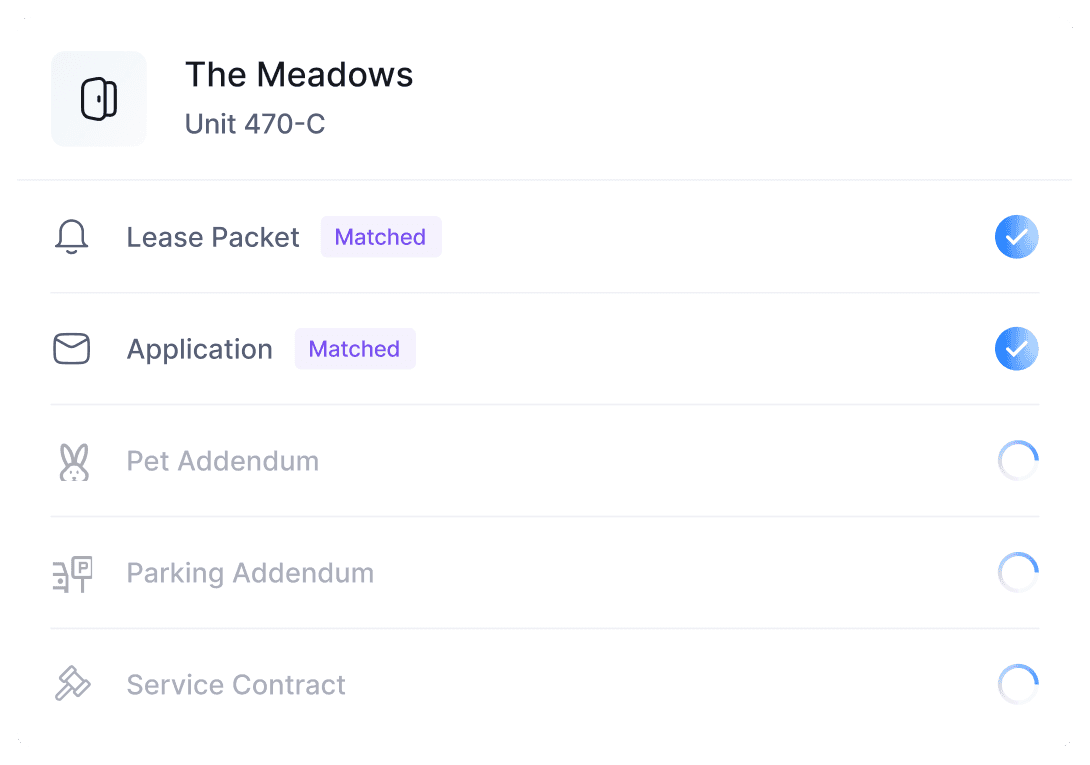
Step-by-Step: How Exception-Based Lease Due Diligence Works
Step 1: Centralize Lease and Operational Data
The first step is collecting all relevant acquisition records:
- executed lease agreements
- amendments and addenda
- rent roll exports
- resident ledgers
- billing records
- renewal documentation
- utility bill data and operating expenses
Without centralized data, meaningful exception analysis is impossible.
Step 2: Standardize Lease Data
Lease information must be normalized into structured fields such as:
- base rent
- fees and management fee items
- lease dates
- concessions
- deposits
- renewal terms
- square footage by unit
This allows consistent comparison across the portfolio.
For reconciliation frameworks, see rent roll to lease reconciliation for multifamily M&A →
Step 3: Define Exception Rules
Teams then establish risk and discrepancy criteria.
Common exception triggers include:
- rent mismatches
- missing ancillary charges
- expired concessions still active
- unsigned leases
- missing addenda
- billing inconsistencies
- unusual lease clauses
These rules create the framework for risk identification.
Step 4: Run Automated Lease Audit Checks
The system compares lease data against:
- PMS records
- rent rolls
- billing systems
- ledgers
This process surfaces discrepancies automatically. This is where modern automated lease audit workflows become scalable.
Step 5: Prioritize High-Risk Units
Not every discrepancy carries the same financial impact.
Teams should prioritize units tied to:
- large rent variances
- recurring billing inconsistencies
- concession exposure
- compliance risk
- incomplete documentation
- hidden costs in operating expenses
This allows reviewers to focus on material hidden lease risks first.
Step 6: Route Exceptions for Human Review
Exception-based workflows still rely on human oversight.
The difference is that reviewers focus on:
- flagged units
- unresolved discrepancies
- high-risk findings
This significantly reduces review time while maintaining diligence quality.
Step 7: Track Resolution and Financial Impact
Acquisition teams should track:
- unresolved issues
- estimated revenue exposure
- property-level trends
- recurring discrepancy patterns
This creates stronger visibility across the multifamily acquisitions process.
Common Hidden Lease Risks Found Through Exception-Based Review
Exception-driven workflows frequently uncover:
- missing pet and parking lot fees
- incorrect renewal pricing
- underbilled rent
- inconsistent concessions
- unsigned lease documents
- ledger mismatches
- operational policy violations
- line item errors in billing records
Many of these red flags remain invisible in sample-based reviews.
For broader risk patterns, see 11 hidden lease due diligence risks to check in 2026 →
Why Exception-Based Review Is Replacing Sample-Based Review
Historically, many acquisitions teams relied on sampling a subset of leases.
The problem is that sampling often misses:
- portfolio-wide operational patterns
- recurring billing discrepancies
- systemic lease execution issues
Exception-based workflows improve coverage while reducing manual effort. This is especially important in institutional multifamily acquisitions.
Modern audit technology combines digital tools, technical expertise, and professional judgment. According to PwC’s audit technology practice, full-population analysis produces more precise risk assessments than sample testing. Teams can then focus attention on complex, high-risk areas that sampling would miss.
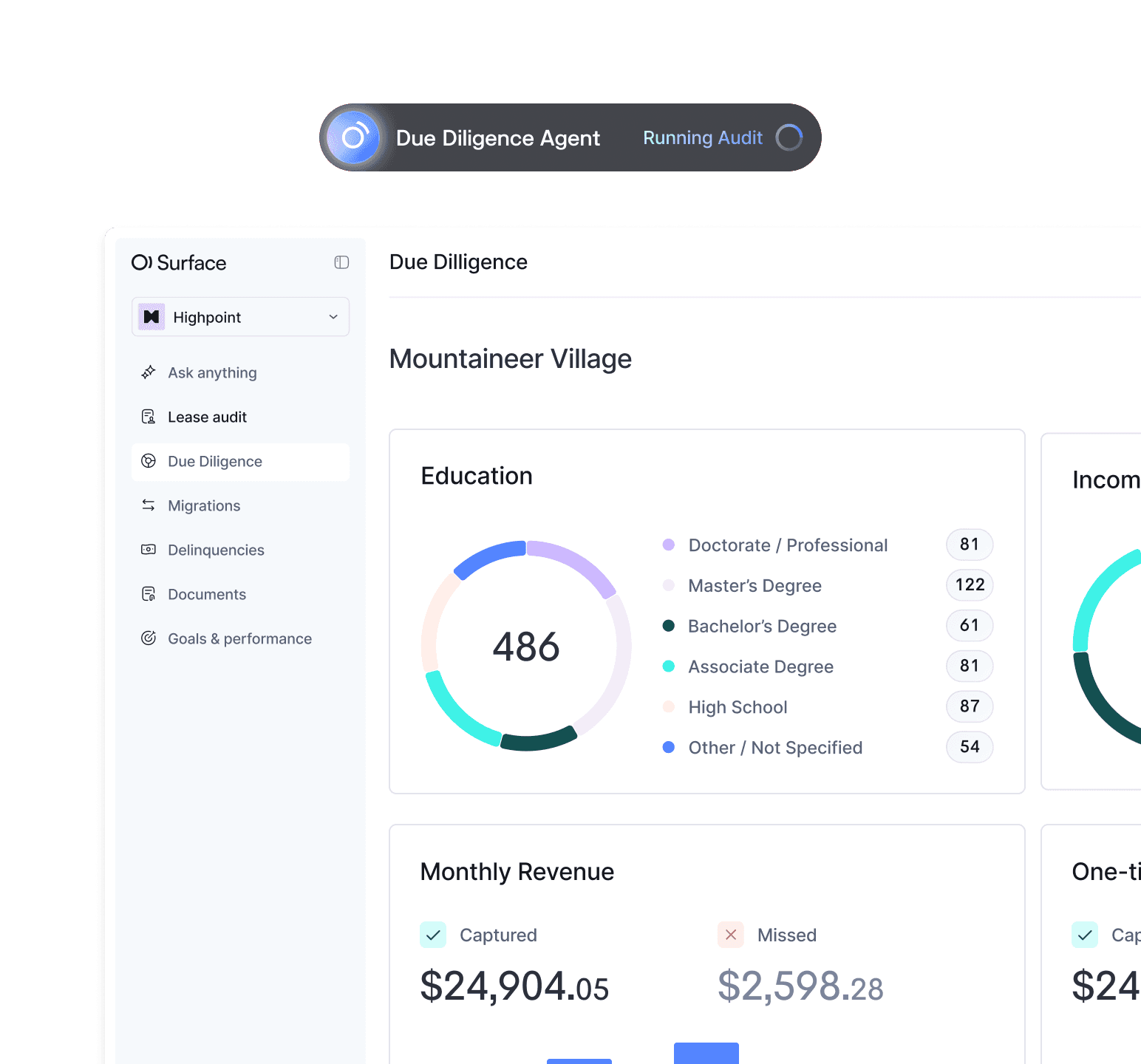
Where SurfaceAI Fits in Exception-Based Due Diligence
SurfaceAI supports multifamily lease due diligence by helping acquisitions teams automate validation and prioritize review workflows.
SurfaceAI helps teams:
- analyze lease documents at scale
- reconcile lease terms against rent rolls and billing data
- identify discrepancies tied to revenue leakage
- surface hidden lease risks
- support exception-based review workflows
- improve operational visibility during acquisitions
This allows acquisitions and asset management teams to scale diligence without relying solely on manual review.
For related workflows, see how to evaluate AI lease due diligence platforms →

“The audit program from SurfaceAI was a game-changer for us. This structure helped us identify and capitalize on missed opportunities for revenue, turning what was once a blind spot into a source of income.”
Glennette Calero, Property Manager
Benefits of Exception-Based Lease Due Diligence
Faster review cycles. Teams spend less time on low-risk leases.
Better risk prioritization. Material discrepancies receive attention earlier.
Improved operational visibility. Patterns emerge across the portfolio more clearly.
Stronger underwriting confidence. Validated lease data improves acquisition modeling and cash flow assumptions.
More scalable diligence workflows. Teams can manage larger multifamily investment deals more consistently.
Common Mistakes Teams Make
Treating every lease the same. Not all discrepancies carry equal operational impact.
Over-relying on sampling. Sampling often misses systemic issues.
Using static spreadsheet workflows. Spreadsheets become difficult to manage at acquisition scale.
Ignoring operational data reconciliation. Lease management review without system validation creates blind spots.
Key Takeaway
Exception-based lease due diligence allows acquisitions teams to move faster without reducing diligence depth.
The combination of:
- automated lease audit workflows
- structured risk identification
- reconciliation processes
- prioritized human review
creates a more scalable risk management process for large-scale lease review in commercial real estate.
Conclusion
As multifamily acquisitions become larger and more operationally complex, traditional lease review methods struggle to keep pace.
Exception-based workflows help acquisitions teams focus attention where it matters most. They improve speed, visibility, and underwriting confidence.
If your organization wants to modernize multifamily lease due diligence and reduce hidden acquisition risk, book a demo. See how SurfaceAI supports scalable, exception-based lease review workflows.
Frequently Asked Questions About Exception-Based Lease Due Diligence