
11 Hidden Lease Due Diligence Risks to Check in 2026

Most multifamily acquisitions do not fail because of obvious issues.
They fail because of small lease-level risks that were never fully reviewed.
A missing fee across 300 units. A concession applied incorrectly. A renewal not reflected in billing. An incomplete lease file that weakens enforcement.
Individually, these seem minor.
Across a multifamily property, they directly impact cash flow and investor returns.
That is why multifamily lease due diligence is moving beyond sampling and summaries toward large-scale lease audit processes. Property managers and acquisition teams who rely on sampling alone leave hidden risks in leases undetected. These risks surface only after closing. They quietly erode operating expenses and NOI.
Tenant lease data management is no longer just an operational task. It is a core part of pre-close multifamily acquisitions due diligence. Owners and managers need to know whether lease terms are compatible with their insurance coverage.
They also need to verify alignment with operating expenses before issues surface. Leases contain hidden risks that require comprehensive and modern controls. Both landlords and tenants benefit when teams review lease terms carefully before any transaction closes. NAIOP documents why this review is essential for protecting post-close performance →
For broader acquisition analysis, see how to analyze multifamily investment opportunities →
1. Missing Ancillary Charges (Pet, Parking, Utilities)
The risk
Leases include fees that are never activated in billing.
Impact
Ongoing revenue leakage across multiple units.
The check
Compare lease fee clauses against active charges in the PMS.
2. Incorrect Base Rent in System vs Lease
The risk
The signed lease shows one rent, but the system reflects another.
Impact
Underbilling or inconsistent collections.
The check
Cross-reference lease documents with rent roll data.
3. Expired Concessions Still Applied
The risk
Temporary discounts continue beyond their intended period.
Impact
Reduced effective rent and NOI erosion.
The check
Validate concession timelines against billing records.
4. Renewal Terms Not Implemented Correctly
The risk
Renewal agreements exist but are not reflected accurately in the system.
Impact
Missed rent increase or incorrect lease terms.
The check
Match renewal lease documents to updated rent and lease records. This is a critical step in tenant lease data management.
5. Incomplete or Missing Lease Documents
The risk
Lease files are missing key lease documents or signatures.
Impact
Legal issues and enforceability risk. Missing security deposit records also create exposure for landlords and tenants alike.
The check
Verify lease document completeness across all tenant files. Incomplete files are a red flag in any large-scale lease audit.
6. Inconsistent Charges Across Similar Units
The risk
Identical units are billed differently without justification.
Impact
Revenue inconsistency and operational inefficiency. This surfaces in tenant lease data management when charge structures are compared at scale.
The check
Compare charge structures across unit types and properties.
7. Incorrect Move-In and Proration Calculations
The risk
Move-in charges are calculated incorrectly.
Impact
Lost revenue or resident disputes. Errors here affect cash flow from day one of ownership.
The check
Audit proration logic against lease start dates and billing entries.
8. Delinquency Exposure Hidden in Lease Data
The risk
Certain lease terms or resident types correlate with higher delinquency.
Impact
Underestimated risk in underwriting. A red flag that property managers and acquisitions teams should flag in lease accounting analysis.
The check
Analyze lease terms alongside payment behavior.
9. Utility and Bill-Back Errors
The risk
Utility charges are inconsistently applied or missing.
Impact
Revenue leakage and cost imbalance. These errors directly affect operating expenses and cash flow projections for the multifamily property.
The check
Validate utility clauses against billing system outputs. These clauses differ significantly from commercial leases. Leases include specific bill-back structures. Teams must validate them line by line.
10. Lease Terms Not Matching Operational Policies
The risk
Leases include outdated or inconsistent policy terms.
Impact
Operational confusion and legal issues. Inconsistent lease terms create disputes between landlords and tenants, especially around common areas, security deposit handling, and maintenance responsibilities.
The check
Compare lease templates against current policy standards.
11. Data Mismatch Across Systems (Lease vs PMS vs Ledger)
The risk
Different systems reflect conflicting information.
Impact
Inaccurate lease accounting, flawed underwriting assumptions, and legal issues tied to misreported rent rolls and operating expenses.
The check
Perform full lease report reconciliation across data sources. This is the most comprehensive step in tenant lease data management and the foundation of any large-scale lease audit.
For reconciliation workflows, see real-time lease report reconciliation →
Why These Risks Are Often Missed
Traditional lease review processes rely on:
- sampling a subset of leases
- manual spreadsheet tracking
- time-constrained diligence periods
- inconsistent review standards
This makes it difficult to detect patterns across large multifamily property portfolios.
That is why hidden risks in leases often go unnoticed until after closing. Property managers inheriting a multifamily property after a poorly executed diligence process face months of cleanup. They must correct lease accounting errors and resolve disputes between landlords and tenants.
Revenue that teams should have identified before closing is often lost permanently. Early review of title, operational records, and lease documents heads off numerous legal issues.
Some of those issues would otherwise delay closing. Others create post-close liability. NAIOP documents why this step matters before any transaction closes →
Where SurfaceAI Fits in Lease Due Diligence
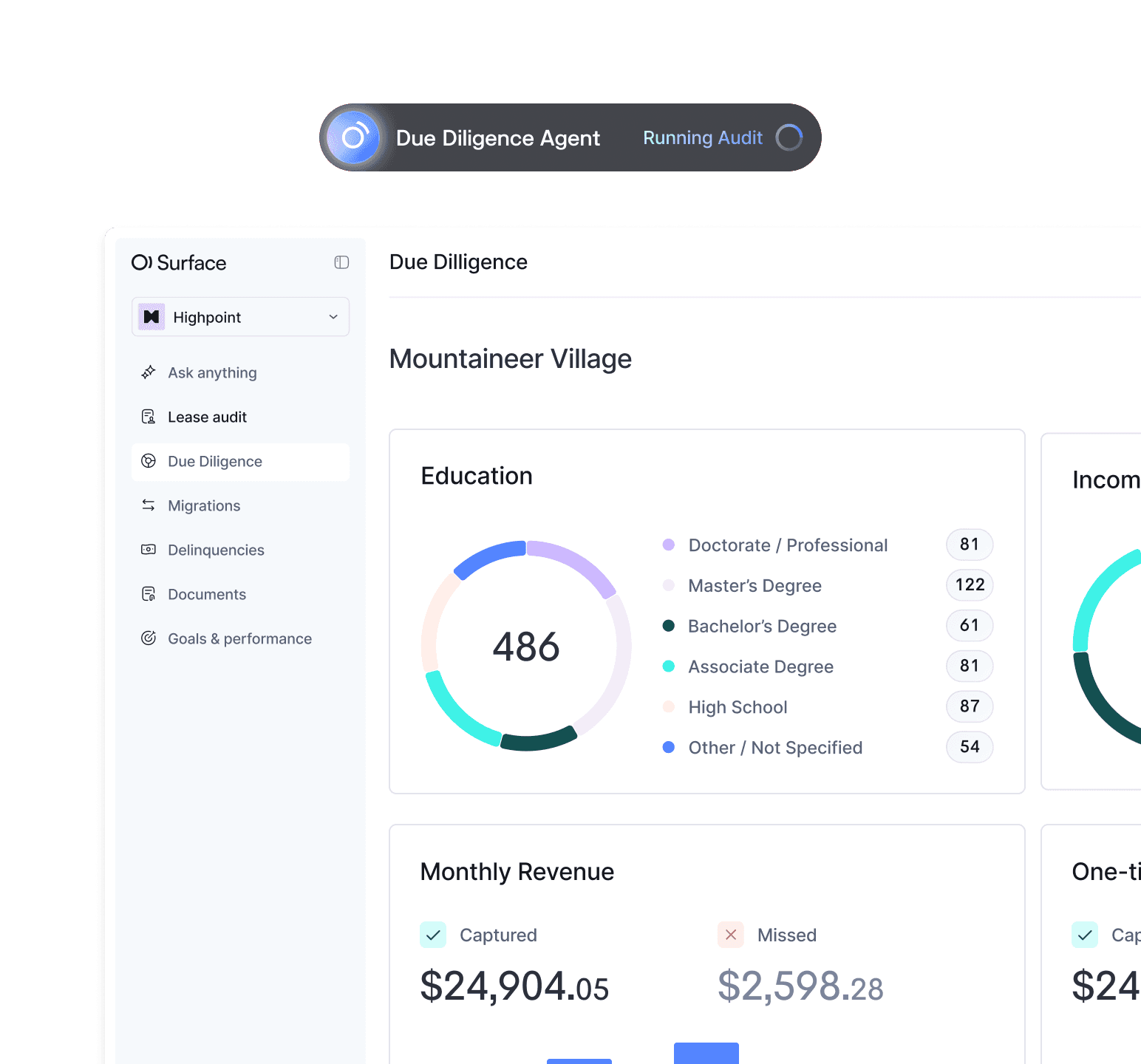
SurfaceAI supports multifamily acquisitions due diligence by enabling large-scale lease audit workflows.
Instead of reviewing a small sample of leases manually, SurfaceAI helps teams:
- analyze lease documents across entire portfolios
- compare lease terms with rent roll and billing data
- identify discrepancies tied to revenue leakage
- surface compliance issues early
- improve confidence in underwriting assumptions
This allows acquisitions and asset management teams to move faster without sacrificing depth. Tenant lease data management at scale is where SurfaceAI delivers the most value. It compares lease terms, rent rolls, security deposit records, and operating expenses in one workflow.
For related controls, see lease auditing and automation systems →
How to Improve Your Lease Review Process
To strengthen multifamily lease due diligence and make more informed decisions:
Expand Coverage
Move beyond sampling to broader review. A large-scale lease audit surfaces patterns that sampling misses.
Standardize Checks
Define consistent lease review process criteria across all properties.
Automate Comparisons
Use tools to compare documents and system data in real time.
Focus on Revenue Drivers
Prioritize fees, rent increase accuracy, and concessions, the areas most likely to hide hidden risks in leases.
Validate Data Early
Identify discrepancies in lease data before closing. Strong tenant lease data management starts during diligence, not after.
Key Takeaway
Multifamily lease due diligence is no longer just a checklist.
It is a critical process that directly impacts:
- acquisition pricing
- projected returns
- operational performance
The more thorough the lease review process, the fewer surprises after closing. Property managers and investors who invest in large-scale lease audit workflows make more informed decisions. They protect operating expenses and cash flow projections from hidden risks in leases.
Conclusion
Hidden lease risks are one of the most common causes of underperformance in multifamily acquisitions.
They are also some of the most preventable.
Investors who improve their lease review process and use tools that scale across portfolios protect revenue. They also reduce compliance risk. They make better acquisition decisions.
Book a demo to see how SurfaceAI supports multifamily lease due diligence at scale. See how it delivers stronger visibility into lease-level risk across acquisitions.
Frequently Asked Questions About Hidden Lease Due Diligence Risks