
Guide to Real-Time Lease Report Reconciliation

In multifamily property management, many reporting problems start long before reports are created.
They begin when lease terms, rent rolls, charges, and ledger data stop matching each other.
Teams may sign a renewal but never update it in the PMS. A fee may exist in the lease agreements but never be billed. A concession may expire in theory but remain active in practice.
When these issues go unnoticed, the result is usually revenue leakage and lease compliance issues. Financial reports become inaccurate. Delayed operational decisions erode confidence in NOI.
That is why more operators are moving toward real-time lease report reconciliation powered by automated lease auditing tools.
Instead of relying on manual processes or periodic spreadsheets, these systems continuously compare operational records and flag discrepancies early. This shift supports better risk management across the entire lease portfolio.
For broader controls context, see 10 ways automated lease audits stop revenue leaks →
What Is Lease Report Reconciliation?
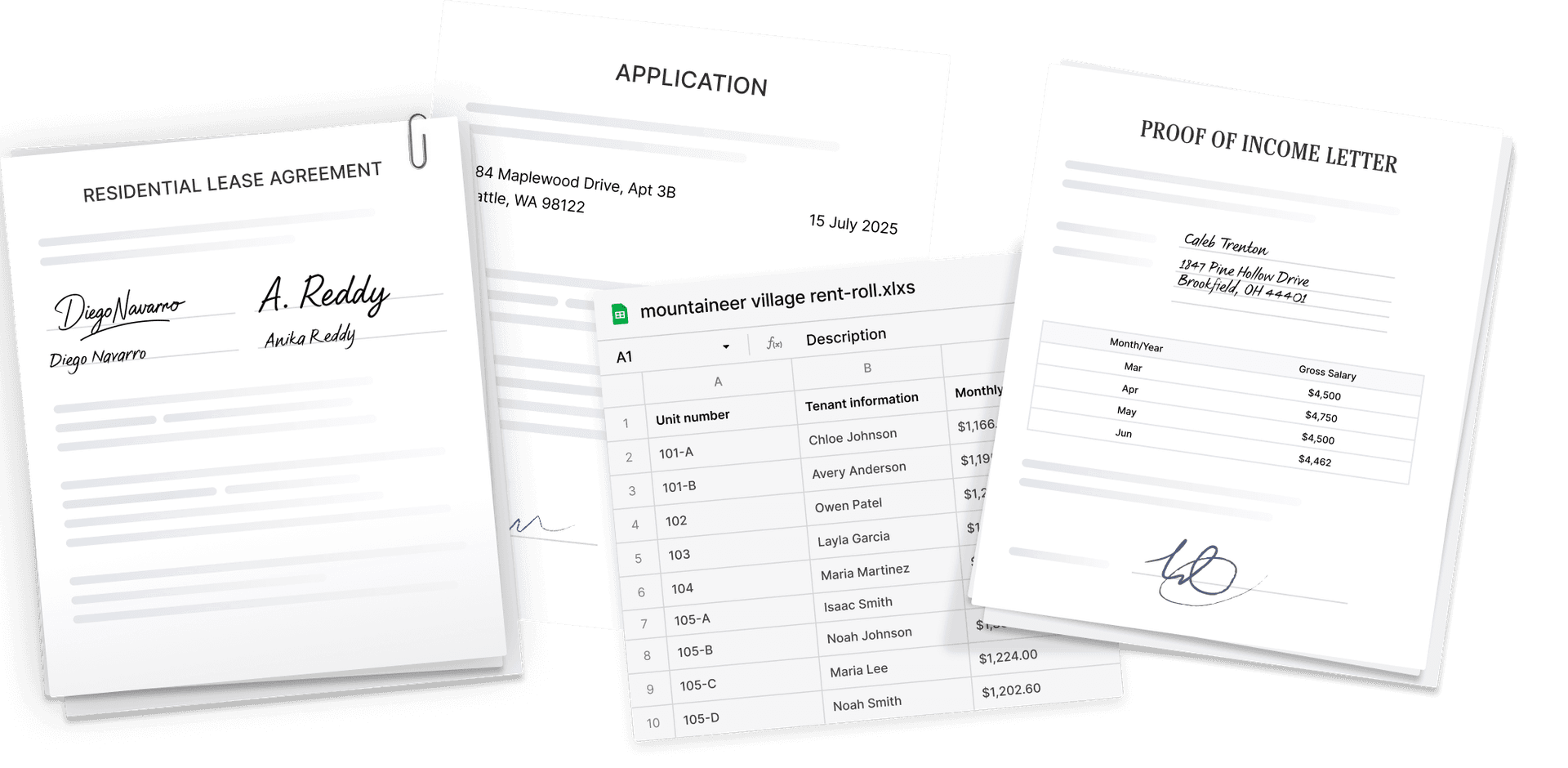
Lease report reconciliation is the process of ensuring that key records agree across systems.
This often means comparing lease documents, rent roll data, and resident charges. The comparison also covers general ledger entries, concessions, renewals, and occupancy records.
The objective is simple: ensure what was signed, entered, billed, and reported all align.
When they do not align, operators can lose revenue or create compliance issues across the lease portfolio. Leases need comprehensive and modern controls. Owners and managers must know whether lease terms are compatible with operational and financial requirements. NAIOP documents why catching these gaps before problems surface is critical →
Strong reconciliation creates a single source of truth. It gives one reliable view of what residents agreed to in lease agreements, what teams entered in systems, and what they billed.
Why Real-Time Reconciliation Matters
Traditional reconciliation is often monthly or quarterly.
By the time teams discover discrepancies, they may have missed charges for months. Incorrect rents may already affect financial reports. Renewals may need backdated fixes and financial statements may need adjustments.
These delays are time consuming and expensive to unwind. The longer errors remain undetected, the harder they become to correct and the greater the revenue loss that accumulates.
Real-time reconciliation reduces the lag between issue creation and issue resolution.
It gives operations teams real time visibility into what is happening across the lease portfolio. Teams discover problems weeks after they occurred, too late to prevent the impact.
That directly supports stronger multifamily property management performance long term.
Common Lease Compliance Issues Found During Reconciliation
Operators frequently uncover unsigned renewals, outdated addenda, missing required disclosures, incorrect resident billing terms, unapproved concession structures, and inconsistent move-in documentation.
These lease compliance issues are not always dramatic. But across a portfolio they create operational drag and legal risk. Failing to maintain compliance with compliance requirements, even on small items, creates exposure that compounds over time.
Continuous monitoring through automated reconciliation helps teams stay ahead of these issues. It surfaces problems before they become disputes or compliance requirements violations.
Multifamily housing providers must balance a wide array of compliance concerns. Regulatory and operational requirements at multiple levels create ongoing risk management challenges. NMHC documents how these compliance hurdles affect operators across the industry →
Revenue Leakage Detection Through Reconciliation
Many revenue leaks are hidden inside mismatched records.
Common examples include:
- Pet rent listed in lease agreements but absent from billing.
- Parking charges may be active in one system but not another.
- Management approves renewal increases but teams never implement them.
- Concessions end but still reduce rent.
- Teams apply utility bill-backs inconsistently across units.
Each of these individually may seem minor. Across hundreds of units, they represent meaningful revenue loss.
Lease report reconciliation helps surface these issues before they compound through revenue leakage detection. It reduces the risk of errors persisting undetected through multiple billing cycles.
For related financial visibility, see NOI in real estate operations →
What Automated Lease Auditing Tools Do
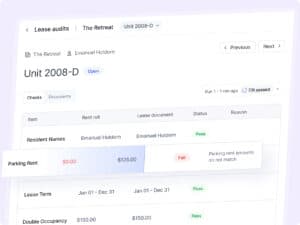
Automated lease auditing tools continuously compare structured and unstructured data sources.
That may include lease PDFs, PMS records, charge schedules, ledgers, renewals, and resident files.
Instead of relying on manual processes, systems can review broader populations faster. This makes lease audit coverage more complete and scalable across large portfolios.
The ability to identify discrepancies automatically, rather than through periodic staff review, transforms reconciliation from a reactive exercise into a proactive management process.
How Real-Time Compliance Monitoring Works
Real-time compliance monitoring means the system checks for issues as changes occur.
Examples: new lease uploaded without signature, renewal entered with missing documents, fee removed unexpectedly, charge mismatched after transfer.
This is different from static audits performed weeks later.
Continuous monitoring creates earlier visibility and faster correction cycles. It gives leadership teams the real time visibility they need to maintain compliance across every property. They do not need to wait for a scheduled review.
Manual Lease Audit Challenges
Many multifamily teams still rely on manual processes for lease review.
Common manual lease audit challenges include spreadsheet dependency and reviewing only sample files. Inconsistent staff processes and delayed findings add to the problem. High labor costs and difficulty scaling across communities make it worse.
These approaches are time consuming and prone to gaps. When staff review only a sample of files, errors in the remaining files go undetected. This can happen for an entire lease cycle before anyone notices.
Manual audits can still be useful for targeted reviews. But they often struggle to keep pace with growing portfolios and increasing compliance requirements.
What a Strong Reconciliation Workflow Looks Like
A modern reconciliation management process usually follows five steps:
1. Data Intake Collect lease files, rent rolls, billing records, and ledger data. Centralizing this data creates a single source of truth that all downstream checks run against.
2. Comparison Logic matches lease terms against system records. Identify discrepancies between what residents agreed to in lease agreements and what teams billed.
3. Exception Detection Identify discrepancies, missing items, and anomalies across the lease portfolio. Flag items that affect revenue or compliance requirements.
4. Workflow Resolution Assign issues to responsible teams. Track status and escalate unresolved items. This creates accountability compliance, ensuring that flagged issues reach resolution rather than remaining open indefinitely.
5. Executive Visibility Track unresolved exposure across the portfolio. Give leadership the real time visibility needed to make informed decisions about operational priorities and risk.
This turns reconciliation from a one-time project into a continuous operating discipline.
Where SurfaceAI Fits
SurfaceAI fits into the validation and operational intelligence layer.
Many operators already have PMS platforms and reporting systems.
What they often need is stronger trust in the data flowing through those systems. A reliable single source of truth supports informed decisions at both the property and portfolio level.
SurfaceAI reviews lease agreements at scale and compares lease terms to PMS records. It identifies discrepancies tied to revenue leakage detection and surfaces lease compliance issues. It creates real time visibility across multifamily portfolios.
Rather than replacing core systems, SurfaceAI strengthens them through continuous monitoring and validation.
See related workflows in lease auditing and automation systems →

Benefits for Multifamily Operations Leaders
For operations leaders, real-time reconciliation can improve several core areas of the management process.
NOI Protection — Faster detection of missed charges and billing gaps reduces the risk of revenue loss compounding across billing cycles.
Financial Report Accuracy — Cleaner data produces more reliable financial reports for internal teams, ownership groups, and lenders.
Operational Efficiency — Less time spent on manual processes means teams can focus on higher-value work.
Standardization — Consistent controls across communities create accountability compliance and reduce variation in how lease agreements are administered.
Faster Decisions — Issues surfaced earlier allow leadership to make informed decisions before month-end surprises affect reporting.
Long-Term Risk Reduction — Continuous monitoring supports risk management over the long term, not just at audit time.
What to Ask When Evaluating Tools
If reviewing vendors, ask:
- Can the platform compare lease files to PMS data to identify discrepancies?
- How frequently does continuous monitoring run?
- Which compliance issues are detected automatically?
- How are issues routed to teams to ensure accountability compliance?
- Can it scale across the full lease portfolio?
- Does it quantify revenue loss exposure?
The answers usually matter more than interface design alone.
Why This Trend Is Growing
As portfolios become larger and leaner, operators need systems that reduce dependence on manual processes.
That is why automated lease auditing tools are increasingly part of modern multifamily property management stacks.
They support better risk management and compliance requirements without requiring linear staffing growth. AI is increasingly used across lease audit, building operations, and portfolio assessment. Operators who adopt early manage complexity without proportional increases in headcount. NAIOP documents why early adoption creates a measurable advantage →
Key Takeaway
Lease report reconciliation is no longer just an accounting task.
It is a core management process tied to revenue protection, compliance requirements, and leadership visibility.
Real-time systems help multifamily property management teams catch issues earlier. They help teams maintain compliance and operate with stronger confidence. This applies across the entire lease portfolio.
Conclusion
Leases, rent rolls, and ledgers should tell the same story.
When they do not, the cost appears through revenue loss, delayed corrections, and reporting risk.
Real-time reconciliation helps close those gaps before they impact NOI. It creates a single source of truth that supports informed decisions. It ensures accountability compliance at every stage of the management process.
Book a demo to see how SurfaceAI supports automated lease audit in real time. See how it modernizes lease controls, improves compliance visibility, and reduces revenue loss across your portfolio.
Frequently Asked Questions About Real-Time Lease Report Reconciliation