
Rent Roll to Lease Reconciliation for Multifamily M&A

In multifamily acquisitions, one of the most important questions is also one of the simplest:
Does the rent roll actually match the leases?
For many acquisition teams, the answer is assumed rather than validated.
That assumption creates risk.
That is why rent roll to lease reconciliation has become a critical part of modern multifamily lease due diligence. Property managers and acquisition teams who skip this step often discover red flags:
- missing charges
- incorrect lease terms
- expired concessions
- incomplete renewals
- inconsistent billing terms
Individually, these issues may appear small.
Cash flow and operating expenses projections both depend on lease-level data being accurate. When they are not, the gap between modeled and actual performance can be significant. Multifamily investment volume increased 7.5% year-over-year to $108 billion through the first three quarters of 2025.
Underwriting assumptions and buyer sentiment are improving across multifamily acquisitions. Cash flow projections depend on lease data being accurate. CBRE documents why lease-level accuracy is more critical than ever for teams seeking to inform decisions with confidence →
This guide outlines a step-by-step framework for reconciling lease data at scale during multifamily M&A.
For broader diligence strategy, see how to evaluate AI lease due diligence platforms →
What Is Rent Roll to Lease Reconciliation?
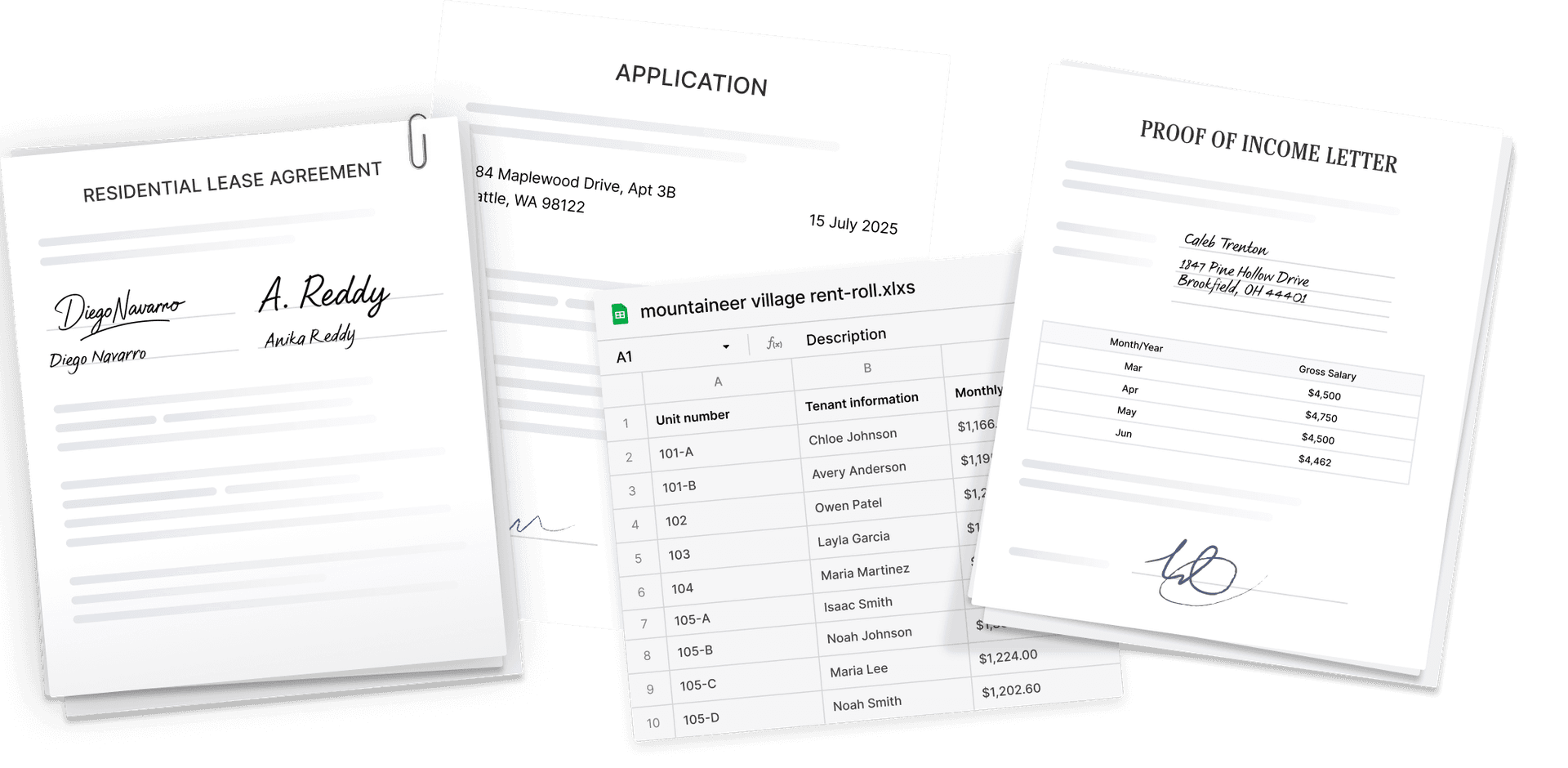
Rent roll to lease reconciliation is the process of comparing:
- executed lease agreements
- rent roll records
- billing data
- concessions
- resident information
to verify that all systems and documents align.
The goal is to ensure:
- lease terms match billing
- reported rents are accurate
- concessions are reflected correctly
- required documentation exists
- underwriting assumptions are reliable
This process is foundational to multifamily acquisitions.
Why Reconciliation Matters in Multifamily M&A
During multifamily acquisitions, buyers often inherit:
- legacy lease structures
- inconsistent operational practices
- fragmented records
- incomplete documentation
Without reconciliation, acquisition teams risk:
- overstated revenue
- hidden operational exposure
- inaccurate valuation assumptions
- post-close correction costs
The larger the portfolio, the harder these issues become to detect manually. Conducting due diligence at scale requires structured workflows, not sampling. Red flags hidden in lease data rarely appear in summary reports. They surface only when teams compare source lease agreements against rent rolls and billing records directly.
Capital expenditures needs and operating expenses assumptions are both affected when lease data is inaccurate. A due diligence exercise unearths weaknesses, key risks, and potential red flags. These are issues that might otherwise remain hidden without structured review.
Dealmakers who incorporate AI into their due diligence processes gain a significant advantage. They analyze growing lease data faster and inform decisions with greater accuracy. PwC documents how this shift is reshaping M&A workflows across real estate →
Common Problems Found During Reconciliation
Across multifamily acquisitions, the same discrepancies appear repeatedly.
Missing Ancillary Charges
Examples include:
- parking fees
- pet rent
- storage charges
- utility bill-backs
The lease agreement may include the charge while the PMS does not. These missing charges are among the most common red flags found during large-scale due diligence processes.
Incorrect Base Rent
The signed lease agreement reflects one amount while the rent roll shows another. This directly impacts underwriting. A rent increase that was negotiated but never implemented in the system creates a gap. The modeled income does not match actual billing.
Concession Errors
Temporary discounts remain active beyond expiration. This reduces effective rent and distorts cash flow projections.
Incomplete Renewal Updates
Renewal documents exist but are not reflected operationally. This is a common red flag that affects both lease terms accuracy and operating expenses forecasts.
Missing or Incomplete Documents
Unsigned leases or missing addenda create compliance risk. These are among the most common hidden risks in leases during acquisitions.
For related risk patterns, see 11 hidden lease due diligence risks to check in 2026 →
Step-by-Step Rent Roll to Lease Reconciliation Process
Step 1: Gather Core Data Sources
Before reconciliation begins, collect:
- executed leases
- amendments and addenda
- rent rolls
- billing records
- resident ledgers
- renewal documents
The goal is creating a unified review dataset. Property managers taking over a multifamily property should treat this step as the foundation for everything that follows.
Step 2: Standardize Lease Data
Lease formats vary significantly across portfolios.
Standardization helps normalize:
- rent fields
- lease dates
- fee structures
- concessions
- resident identifiers
This step is critical in large-scale due diligence processes. Lease abstracts summarize lease terms in a consistent format across the portfolio. They capture square footage, rent increase provisions, and ancillary fee structures.
Step 3: Validate Core Lease Terms
Compare:
- base rent
- lease term
- renewal rates
- move-in dates
- expiration dates
against rent roll records.
This forms the foundation of the lease audit process. Any mismatch between lease terms and rent roll data is a red flag that requires immediate review.
Step 4: Reconcile Ancillary Charges
Review whether fees listed in leases appear in billing systems.
This includes:
- pets
- parking
- utilities
- storage
- amenity fees
These discrepancies are common sources of revenue leakage. They directly affect operating expenses and cash flow projections for the multifamily property.
Step 5: Review Concessions and Discounts
Validate:
- concession amounts
- expiration timelines
- billing adjustments
Many multifamily acquisitions contain concessions that continue beyond approved terms. Each one is a red flag for property managers and acquisition teams reviewing lease data accuracy.
Step 6: Check Document Completeness
Verify:
- signatures
- addenda
- renewal documents
- policy acknowledgments
Incomplete files can create enforceability and compliance issues. Missing documentation is a red flag. It affects legal exposure. It also reduces the reliability of rent rolls during conducting due diligence.
Step 7: Compare Lease Data Across Systems
A strong reconciliation process compares:
- lease documents
- PMS records
- billing systems
- ledgers
This ensures all operational records align. It also helps property managers and acquisition teams inform decisions about pricing, negotiation, and post-close planning. Accurate lease data is the foundation for all three.
For deeper reconciliation frameworks, see real-time lease report reconciliation workflows →
Why Manual Reconciliation Breaks at Scale
Manual review processes typically rely on:
- spreadsheets
- sample reviews
- fragmented workflows
This creates problems when portfolios include:
- hundreds of units
- multiple property types
- inconsistent lease templates
- compressed diligence timelines
The result is often incomplete validation. Hidden risks in leases, including missing charges, incorrect rent increase records, and inaccurate operating expenses, go undetected. Property managers inheriting these issues face months of post-close corrections.
Rising instances of fraud, cybersecurity threats, and regulatory pressures are bringing a sense of urgency to multifamily property management. Escalating operational and compliance risks are putting pressure on property managers. Structured, technology-supported processes are becoming essential for protecting cash flow. JLL documents how these risks are reshaping multifamily operations across portfolios →

Where SurfaceAI Fits in Rent Roll Reconciliation
SurfaceAI supports rent roll to lease reconciliation by helping acquisition teams validate lease-level data at scale.
Instead of relying solely on manual review, SurfaceAI helps teams:
- analyze lease documents across portfolios
- compare lease terms with rent roll and PMS data
- identify discrepancies tied to revenue leakage
- detect compliance gaps
- improve diligence accuracy during multifamily acquisitions
This allows teams to move faster while increasing confidence in underwriting assumptions. Property managers and acquisition teams who use SurfaceAI inform decisions with validated lease data. They do not rely on assumptions built on incomplete review.

“This AI just works like magic, every time. Our teams are no longer in the dark after a takeover and can find everything they need in the PMS.”
Emily Carter, VP Operations
Rent Roll and Lease Abstracting: What’s the Difference?
These terms are related but not identical.
Rent Roll Reconciliation Focuses on validating operational and financial alignment. It answers whether lease terms, billing, and rent rolls all tell the same story.
Lease Abstracting Focuses on extracting and summarizing lease terms from lease agreements into lease abstracts. Lease abstracts capture base rent, square footage, rent increase provisions, concession schedules, and key dates. They give teams a structured view of each lease agreement without reading the full document.
Strong multifamily lease due diligence usually requires both.
Best Practices for Multifamily Acquisition Teams
Expand Beyond Sampling
Reviewing only a subset of leases increases risk.
Prioritize Revenue-Impacting Fields
Focus on:
- rent
- fees
- concessions
- billing alignment
These are the lease data fields most likely to contain red flags that affect cash flow and operating expenses.
Standardize Review Workflows
Consistency improves diligence quality. Property managers and acquisition teams benefit from applying the same review criteria across every lease agreement in the portfolio.
Use Technology for Validation
Automation helps teams scale reconciliation more effectively. It also reduces the hidden risks in leases that manual sampling misses.
Treat Transition Readiness as Part of Diligence
Acquisition success depends heavily on post-close execution. Capital expenditures needs, operating expenses baselines, and cash flow projections all depend on lease data accuracy. That accuracy must be established from day one.
How Reconciliation Improves Acquisition Outcomes
Strong reconciliation workflows help teams:
- improve underwriting accuracy
- identify negotiation leverage
- reduce post-close surprises
- improve operational visibility
- accelerate integration after acquisition
This is increasingly important in institutional multifamily transactions. Teams that inform decisions with validated lease data are better positioned to price accurately. They negotiate with confidence. They operate successfully after close.
Key Takeaway
Rent roll to lease reconciliation is not just an accounting exercise.
It is a core part of multifamily acquisition risk management.
The stronger the reconciliation process, the stronger the confidence in the deal.
Conclusion
As multifamily transactions become more operationally complex, acquisition teams need better ways to validate lease-level data.
Manual review alone is increasingly insufficient for large-scale due diligence.
A structured reconciliation process, supported by automation and validation tools, helps investors identify hidden risks before they impact returns.
Book a demo to see how SurfaceAI supports rent roll to lease reconciliation at scale. See how it improves multifamily lease due diligence, reduces revenue leakage, and strengthens acquisition workflows.
Frequently Asked Questions About Rent Roll to Lease Reconciliation