
How to Scale Multifamily Lease Due Diligence in 2026

Multifamily acquisitions teams are being asked to move faster than ever.
Larger portfolios. Shorter diligence windows. Higher expectations from investors and lenders.
But lease management review remains one of the most operationally difficult parts of the multifamily acquisitions process.
Many teams still rely on:
- spreadsheets
- manual sampling
- fragmented review workflows
- inconsistent lease abstracting standards
That approach becomes difficult to sustain as portfolios scale.
The challenge is no longer simply reviewing leases.
It is reviewing them consistently, accurately, and fast enough to support acquisition timelines.
Property managers and acquisition teams who cannot scale their multifamily lease due diligence process risk missing hidden risks in leases. These include incorrect rent increases, undisclosed capital expenditure needs, and missing security deposit records. They surface only after close.
For multifamily investments at institutional scale, these gaps directly affect returns. Gen AI tools that improve due diligence are enabling 30–50% faster deal cycles for early adopters.
Specialized AI agents read, summarize, and extract insights from diligence files. They help M&A teams make more informed decisions, faster and with greater accuracy. McKinsey documents how early adopters are already realizing compelling results →
This guide explains how leading acquisitions teams are scaling multifamily lease due diligence in 2026. The approach uses batch abstraction, rule-based validation, and exception-driven review workflows.
Why Multifamily Lease Due Diligence Becomes Difficult at Scale
A 50-unit acquisition can often be reviewed manually.
A 2,000-unit portfolio cannot.
Large-scale lease review introduces several problems:
- inconsistent lease formats
- compressed timelines
- fragmented resident records
- multiple PMS exports
- missing documentation
- varying fee structures across properties
As complexity increases, the likelihood of hidden risks in leases also increases. Lease data errors become harder to detect without a structured process. These include mistakes in base rent, rent increases, security deposit records, and capital expenditure disclosures.
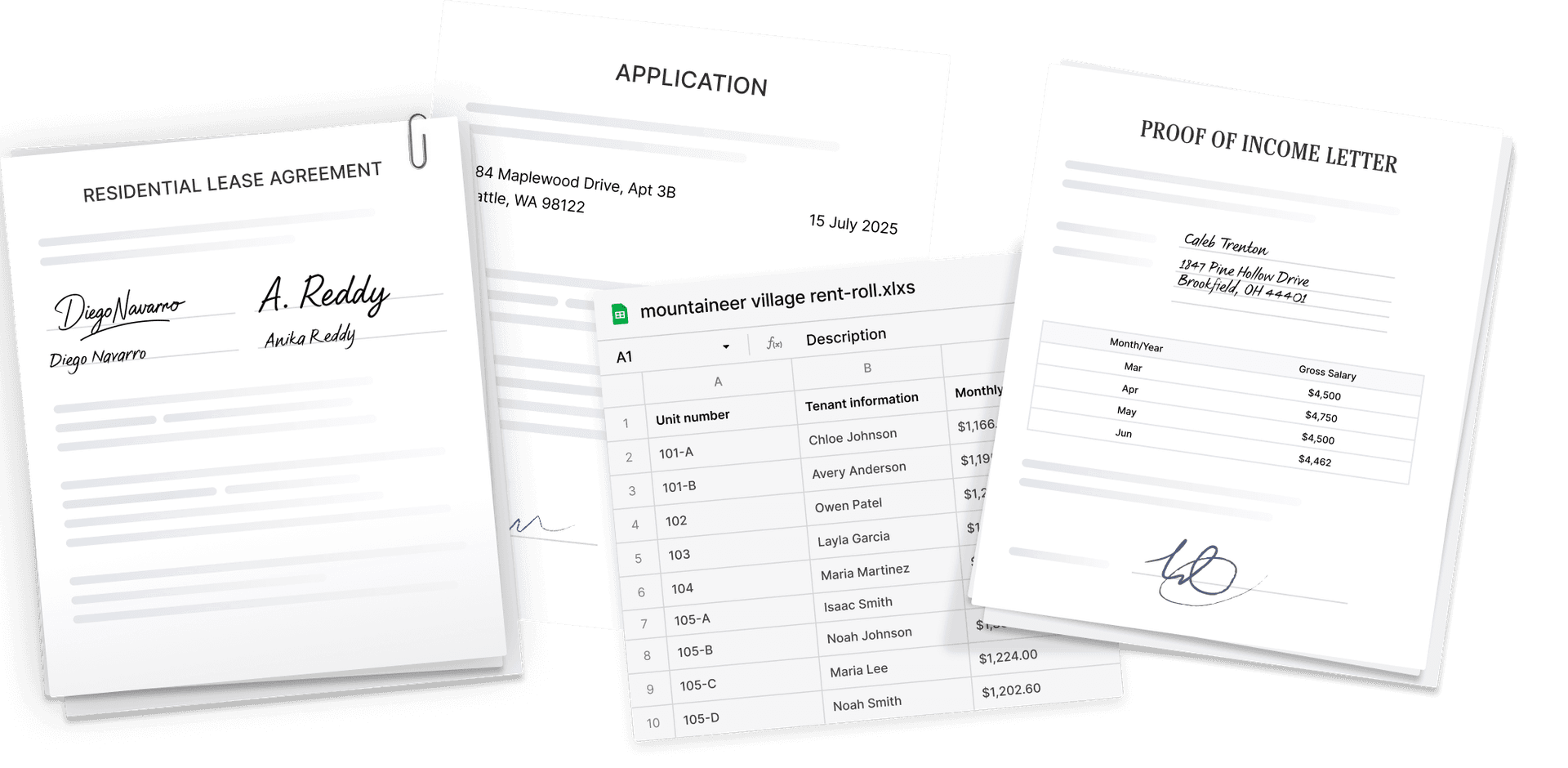
A lease document that appears complete on the surface may contain missing charges. It may also contain incorrect lease terms. Only a systematic review catches both.
What “Scaling Lease Due Diligence” Actually Means
Scaling does not simply mean reviewing more leases.
It means creating a system that:
- standardizes lease abstracting
- validates lease data consistently
- prioritizes material issues
- reduces manual review time
- surfaces exceptions quickly
The goal is not removing humans from the process.
The goal is focusing human attention where it matters most. That means the red flag findings that affect underwriting, operating expenses, and post-close performance.
Step 1: Centralize All Lease and Operational Data
Before review begins, acquisitions teams should collect:
- executed leases
- addenda and renewals
- rent rolls
- resident ledgers
- concession schedules
- billing records
This creates the foundation for structured analysis.
Without centralized lease data, reconciliation becomes fragmented immediately. Property managers inheriting a multifamily investments portfolio need this foundation in place before any meaningful lease audit can begin.
Step 2: Standardize Lease Abstracting
Lease abstracting should follow a consistent structure across all properties.
Key fields typically include:
- base rent
- lease dates
- concessions
- fees
- deposits
- renewal terms
- utility obligations
This step transforms unstructured lease documents into comparable operational data. A lease document that includes multiple addenda, non-standard clauses, or handwritten amendments requires careful standardization. Rule-based validation cannot run reliably without it. Strong lease abstracting reduces downstream review confusion significantly.
Step 3: Run Rule-Based Validation Checks
Once lease data is standardized, teams can apply rule-based checks.
Examples include:
- base rent in lease must equal rent roll
- concession expiration must align with billing
- required addenda must exist
- pet fee clauses must match charges
- rent increases must reflect current billing
This is where the lease audit process becomes scalable. Teams validate lease data against predefined rules instead of reviewing every line item manually. Every mismatch becomes a red flag for focused review.
Large-scale lease review works through systematic exception detection, not manual line-by-line reading.
Step 4: Build Exception-Based Review Workflows
One of the biggest mistakes in large-scale lease review is treating every lease equally.
Not every file requires the same level of attention.
Exception-based review means reviewers focus primarily on leases where:
- discrepancies exist
- confidence scores are low
- data conflicts appear
- compliance gaps are detected
This dramatically improves review efficiency. Property managers and acquisition teams focus their expertise on the red flag findings that matter. They do not spend equal time on every lease document in the portfolio. AI now helps M&A teams identify potential problems earlier in the transaction.
AI will significantly improve the efficiency and effectiveness of due diligence. It helps teams identify potential problems earlier in the transaction. EY documents how this leads to more informed decisions at every stage of the M&A process →
Step 5: Prioritize High-Impact Risks First
Acquisition teams should focus first on issues tied directly to:
- revenue leakage
- compliance exposure
- underwriting assumptions
- enforceability risk
Examples include:
- missing ancillary charges
- incorrect base rent
- unsigned documents
- renewal discrepancies
- expired concessions still active
Every one of these is a potential red flag. For landlords and tenants, missing or incorrect lease terms create disputes that compound post-close. Prioritizing these issues early gives acquisition teams the leverage to negotiate, adjust pricing, or require seller remediation before close.
For related risk patterns, see 11 hidden lease due diligence risks to check in 2026 →
Step 6: Reconcile Lease Data Across Systems
A lease should not be reviewed in isolation.
Teams should compare:
- lease documents
- PMS records
- rent rolls
- billing systems
- ledgers
This reconciliation process often surfaces discrepancies missed during basic abstraction. Lease data that appears accurate in a single system may reveal mismatches when compared across sources. Operating expenses and capital expenditure assumptions both depend on this cross-system accuracy.
For deeper reconciliation workflows, see real-time lease report reconciliation →
Step 7: Track Review Progress Centrally
As portfolios grow, review coordination becomes operationally critical.
Teams should track:
- reviewed leases
- unresolved exceptions
- escalated findings
- estimated financial impact
- missing documents
Without centralized tracking, diligence quality declines quickly. A fragmented review process prevents property managers from making informed decisions about post-close operations. Centralized tracking also helps acquisition teams demonstrate to investors and lenders that they completed a structured large-scale lease review process.
Step 8: Use AI to Scale the Process
AI is increasingly important for scaling multifamily lease due diligence.
Modern systems can help:
- abstract lease terms automatically
- compare documents against operational data
- classify discrepancies
- prioritize high-risk findings
- reduce manual review workload
This allows acquisitions teams to review more leases with greater consistency. AI automates the due diligence process by reviewing financial, legal, and operational lease documents. It does not just summarize contents. It highlights potential red flags for human evaluation.
AI coupled with human insight helps M&A teams flag areas of concern in lease data and operating expenses. It catches what human sampling would miss. Deloitte documents how this combination turns due diligence into a more reliable process →
Where SurfaceAI Fits in This Workflow
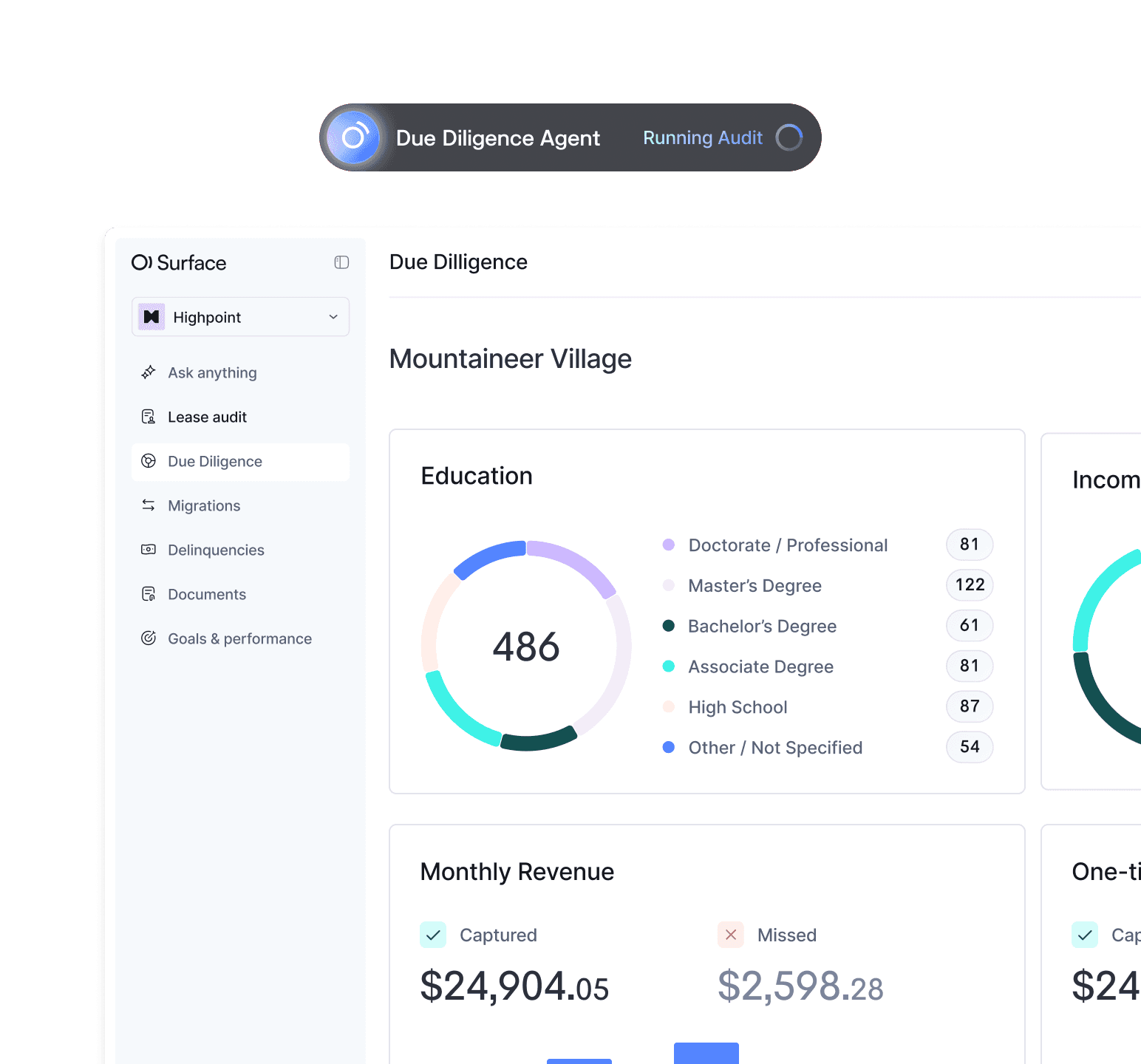
SurfaceAI supports acquisitions and asset management teams by acting as an intelligence and validation layer during due diligence.
Instead of relying solely on spreadsheets and manual sampling, SurfaceAI helps teams:
- analyze lease documents at scale
- standardize lease abstracting workflows
- run rule-based validation checks
- reconcile lease data against PMS and rent roll records
- identify discrepancies tied to revenue leakage
- support exception-based review processes
For multifamily investments teams, this means covering the full portfolio, not just a sample. Teams make informed decisions based on validated lease data, not incomplete review.
Property managers and acquisition teams that use SurfaceAI identify every red flag and verify every lease document. They confirm that base rent, rent increases, security deposit records, and capital expenditure disclosures all align with rent rolls and billing data before the deal closes.
For related controls, see how to evaluate AI lease due diligence platforms →

“The worst part of due diligence is doing the audits and SurfaceAI has taken that on”
Gary Robbins, Transitions Manager
Common Mistakes When Scaling Lease Due Diligence
Over-Reliance on Sampling Sampling increases the chance of missing portfolio-wide patterns. Hidden risks in leases, especially those affecting operating expenses and rent increases, only surface through full-portfolio review.
Treating All Exceptions Equally Not every discrepancy has material impact. Teams should prioritize red flag findings tied to base rent, capital expenditure, and compliance exposure first.
Manual Spreadsheet Dependency Spreadsheets become difficult to maintain across large acquisitions. They also increase the risk of lease data errors that affect informed decisions.
Lack of Standardized Rules Without defined checks, reviewers produce inconsistent outputs. Lease abstracting standards should cover every key field, from base rent to security deposit to rent increases.
Delaying Reconciliation Until Late in the Process Teams that find discrepancies early can address them. Teams that find them late often cannot. Property managers and acquisition teams that wait until late in the process face compressed timelines. There is often nowhere to go when issues surface at that stage.
How Scaled Due Diligence Improves Acquisitions
Strong due diligence workflows help teams:
- improve underwriting accuracy
- identify negotiation leverage
- reduce post-close surprises
- accelerate integration planning
- improve investor confidence
This is increasingly important in institutional multifamily investments. Teams that validate lease data systematically, rather than relying on sampling, make more informed decisions about pricing, operating expenses, and capital expenditure planning. Landlords and tenants both benefit when teams verify lease terms accurately before ownership transfers. It reduces disputes, billing corrections, and operational disruption after close.
Key Takeaway
Scaling multifamily lease due diligence is not about reviewing more leases manually.
It is about building a structured process that combines:
- standardized lease abstracting
- rule-based validation
- exception-focused review
- system reconciliation
- AI-assisted workflows
That combination allows teams to move faster while improving diligence quality and making more informed decisions before committing capital to multifamily investments.
Conclusion
The multifamily acquisitions process is becoming more data-intensive and operationally complex.
Traditional lease management review methods struggle to keep up with larger portfolios and compressed timelines.
Teams that adopt scalable diligence workflows gain better visibility into lease data risk before closing. They also surface revenue leakage and operational exposure earlier. Property managers and acquisition teams who invest in structured large-scale lease review protect their multifamily investments. They make more informed decisions at every stage of the multifamily acquisitions process.
Book a demo to see how SurfaceAI supports faster, more consistent acquisition workflows. See how it improves large-scale lease review and streamlines multifamily lease due diligence.
Frequently Asked Questions About Scaling Multifamily Lease Due Diligence