
10 Ways Automated Lease Audits Stop Revenue Leaks
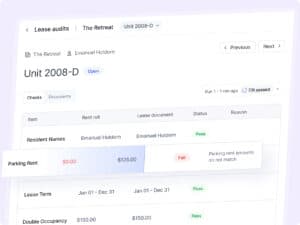
Most revenue leakage in multifamily housing does not come from one dramatic mistake.
It comes from small lease-level issues repeated across dozens or hundreds of units. Missing fees, incorrect renewals, outdated concessions, and charges never activated all add up. Incomplete records and mismatches between documents and PMS data do the same.
When these errors remain undetected, they quietly reduce NOI.
That is why multifamily operators are adopting automated lease audit software. They are moving from periodic manual reviews to real-time controls.
Instead of waiting for month-end or annual audits, automated systems continuously validate leases, charges, and compliance records.
Below are ten practical ways automated lease audits stop revenue leaks across multifamily portfolios.
NOI is directly tied to rental income, rental losses, and other income from property operations.
For broader controls context, see top AI lease audit tools for multifamily operations →
1. Detect Missing Monthly Fees
Common examples include pet rent, parking charges, storage fees, and utility bill-backs.
These fees are often disclosed in leases but never fully activated in billing systems.
Automated lease audit software compares lease terms against PMS charges and flags missing revenue quickly.
This is where revenue leakage detection begins – at the unit level, one missing charge at a time.
2. Identify Incorrect Base Rent Amounts
Even small rent discrepancies can become meaningful across a portfolio.
Common examples include a lease signed at one rate but the system billing another. Renewal rates get entered incorrectly. Concessions get accidentally embedded in the rent amount.
Automated checks help validate that billed rent matches executed lease terms.
This is a core form of revenue leakage detection.
3. Flag Expired Concessions Still Being Applied
Move-in specials and temporary concessions often have end dates.
Manual processes sometimes fail to remove them.
That can mean discounted rent continuing too long, waived fees not reactivated, and underbilling after promo periods end.
Automated audits monitor timing and identify exceptions.
4. Catch Renewal Increases That Were Never Implemented
Many operators negotiate renewals correctly but fail to execute them cleanly in systems.
Examples: signed renewal stored but not updated in PMS, partial increase entered, start date delayed incorrectly.
Lease report validation helps ensure approved increases are actually billed.
5. Detect Missing or Incomplete Lease Documents
Revenue and compliance are closely connected.
Unsigned or missing documentation can create disputes that delay collections or weaken enforcement.
Real-time compliance monitoring can flag unsigned renewals, missing addenda, incomplete resident files, and outdated forms still in circulation.
For document workflows, see document automation tools for real estate operations →
6. Surface Resident Charge Inconsistencies Across Similar Units
Sometimes the issue is not one lease, but inconsistent treatment across the property.
Examples:
- some residents charged valet trash, others not
- same parking product priced differently without approval
- utility fees unevenly applied
Multifamily portfolio lease auditing helps compare patterns across units and communities.
That reveals leakage manual reviews often miss. Rising operating expenses and shifting tenant demand are forcing multifamily owners to adopt proactive strategies to preserve NOI. NAR documents how operators must rethink lease structures and controls to protect revenue as margin pressure grows.
7. Validate Transfers, Move-Ins, and Move-Out Billing
Transitions are high-risk moments.
Errors commonly happen during resident transfers, move-in prorations, move-out final charges, and deposit offsets.
Automated systems can flag unusual billing gaps or incomplete transitions.
These checks are especially useful in high-turn portfolios.
8. Compare Source Leases Against PMS Records
Many teams trust system data without checking source files.
But errors can enter through manual data entry, imports, rushed renewals, and legacy migrations.
Strong automated lease audit software compares lease documents with PMS records to identify mismatches.
This is where property management software integrations matter most. Tools that connect directly to existing PMS environments can validate data at the source. They flag discrepancies in real time. They do this without replacing current systems.
This is where SurfaceAI often fits as an intelligence layer rather than a PMS replacement.
SurfaceAI helps operators validate lease data, detect discrepancies, and strengthen trust in downstream reporting.
See related controls in lease auditing and automation systems →
9. Create Faster Resolution Workflows
Finding issues matters, but resolving them matters more.
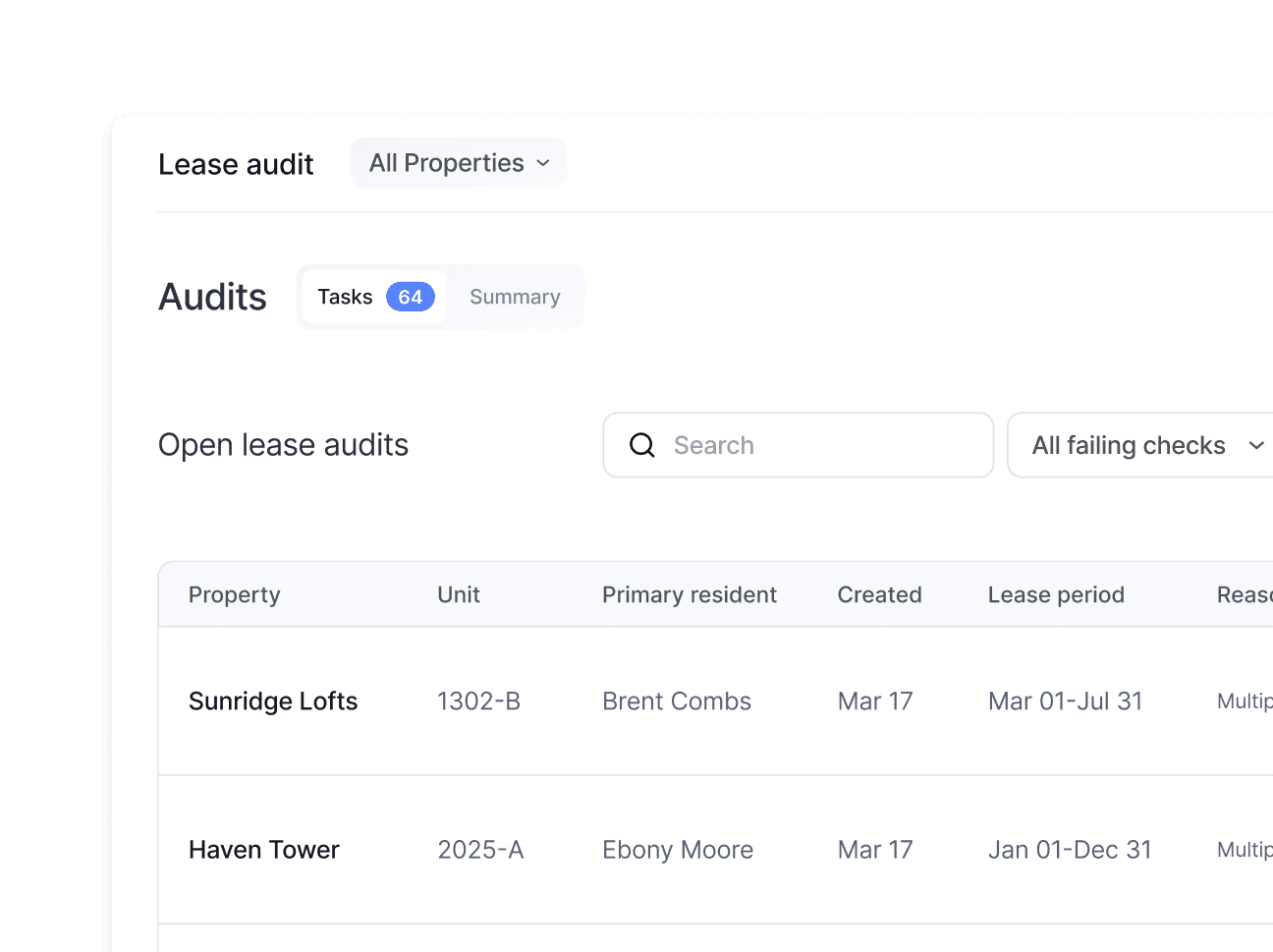
Modern tools support workflows such as assigning tasks to site teams, tracking status, escalating unresolved items, and documenting corrections.
This improves the gap between issue discovery and revenue recovery.
It also highlights the difference between manual vs automated lease audit workflows.
Manual reviews often stop at findings. Automated systems help drive action.
10. Give Leadership Real-Time Portfolio Visibility
Executives do not want to wait for quarterly audits to learn where money is leaking.
Modern dashboards can show unresolved lease discrepancies, estimated revenue exposure, compliance trends, and property-level comparisons.
That creates faster decision-making across operations teams.
For broader reporting visibility, see real estate asset management reporting →
Manual vs Automated Lease Audit Workflows
Manual Audits Often Mean:
- spreadsheets
- sampling only some files
- delayed findings
- inconsistent follow-up
- staff-intensive reviews
Automated Audits Mean:
- broader coverage
- continuous monitoring
- faster detection
- structured remediation
- stronger executive visibility
For growing portfolios, automation usually scales better than headcount-heavy review models.
Why This Matters to Multifamily Leaders
Small lease issues multiplied across a portfolio can materially impact NOI.
Operators evaluating lease audit automation are usually trying to improve in several areas. These include protecting revenue, strengthening compliance, and reducing manual workload. Improving data confidence and creating repeatable controls across communities also drive adoption.
Automated lease audits directly support each objective. Operators depend on integrated systems for accuracy, compliance, and financial visibility. The quality of underlying data determines the reliability of every report. NMHC’s property management software resource documents both realities in detail →
Key Takeaway
Revenue leakage is often hidden in ordinary lease activity.
That is why periodic reviews are no longer enough for many operators.
Automated lease audit software helps multifamily teams detect errors faster. It improves compliance. It recovers revenue that would otherwise remain unnoticed.
Conclusion
Lease accuracy is no longer just an administrative concern.
It is an operating performance issue tied directly to NOI, compliance, and leadership visibility.
As portfolios grow, manual lease reviews become harder to sustain and easier to miss issues within.
Book a demo to see how SurfaceAI supports automated lease validation in real time. See how it improves lease controls, reduces revenue leakage, and modernizes multifamily portfolio lease auditing.
Frequently Asked Questions About Automated Lease Audits