
Real Estate Asset Management Reporting: Smarter Portfolio Visibility in 2026

Strong portfolios are not managed by instinct alone.
They are managed through consistent, accurate reporting that helps ownership groups understand performance, risk, and opportunities across assets.
That is the role of real estate asset management reporting.
Real estate asset management reports help asset managers evaluate whether properties are meeting expectations. They also identify where intervention is required. These range from monthly operating summaries to executive dashboards.
But many reporting processes remain manual, delayed, and fragmented across systems.
As portfolios become more complex, modern reporting is shifting from static spreadsheets toward automated, real-time operational intelligence. Nearly two-thirds of real estate investors expect the highest ROI from data infrastructure investments.
Asset management and property operations are the top two areas. A unified data strategy creates a comprehensive window into the business. It aggregates data from different departments into a single view. EY documents how this eliminates toggling between reports and produces quicker insights →
For broader portfolio technology context, see real estate asset management software for modern operators →
What Is Real Estate Asset Management Reporting?
Real estate asset management reporting is the structured process of collecting, analyzing, and presenting performance data. It covers one or more real estate assets across a portfolio.
These real estate asset management reports serve multiple audiences. Asset managers, ownership groups, investment committees, and operating partners all rely on them. Lenders use them in some cases as well.
The goal is to create visibility into both current performance and forward-looking risks.
What Is Included in an Asset Management Report?
A strong asset management report real estate package includes an asset summary report real estate with the key metrics that matter. This covers occupancy trends, rental income, delinquency exposure, expense variance, NOI movement, leasing velocity, capital project status, operational risks, and market comparisons.
The exact mix depends on asset type, ownership structure, and reporting cadence.
Real Estate Asset Reporting vs Property Management Reporting
These two functions are related but different.
Property Management Reporting Focuses On:
- onsite operations
- rent collection
- maintenance activity
- leasing activity
- resident service metrics
Asset Reporting Focuses On:
- portfolio performance
- value creation
- investment returns
- risk oversight
- strategic decisions
Property reporting helps run buildings.
Real estate asset reporting helps direct capital.
For related operational visibility, see property management software solutions across portfolios →
Why Traditional Reporting Often Falls Short
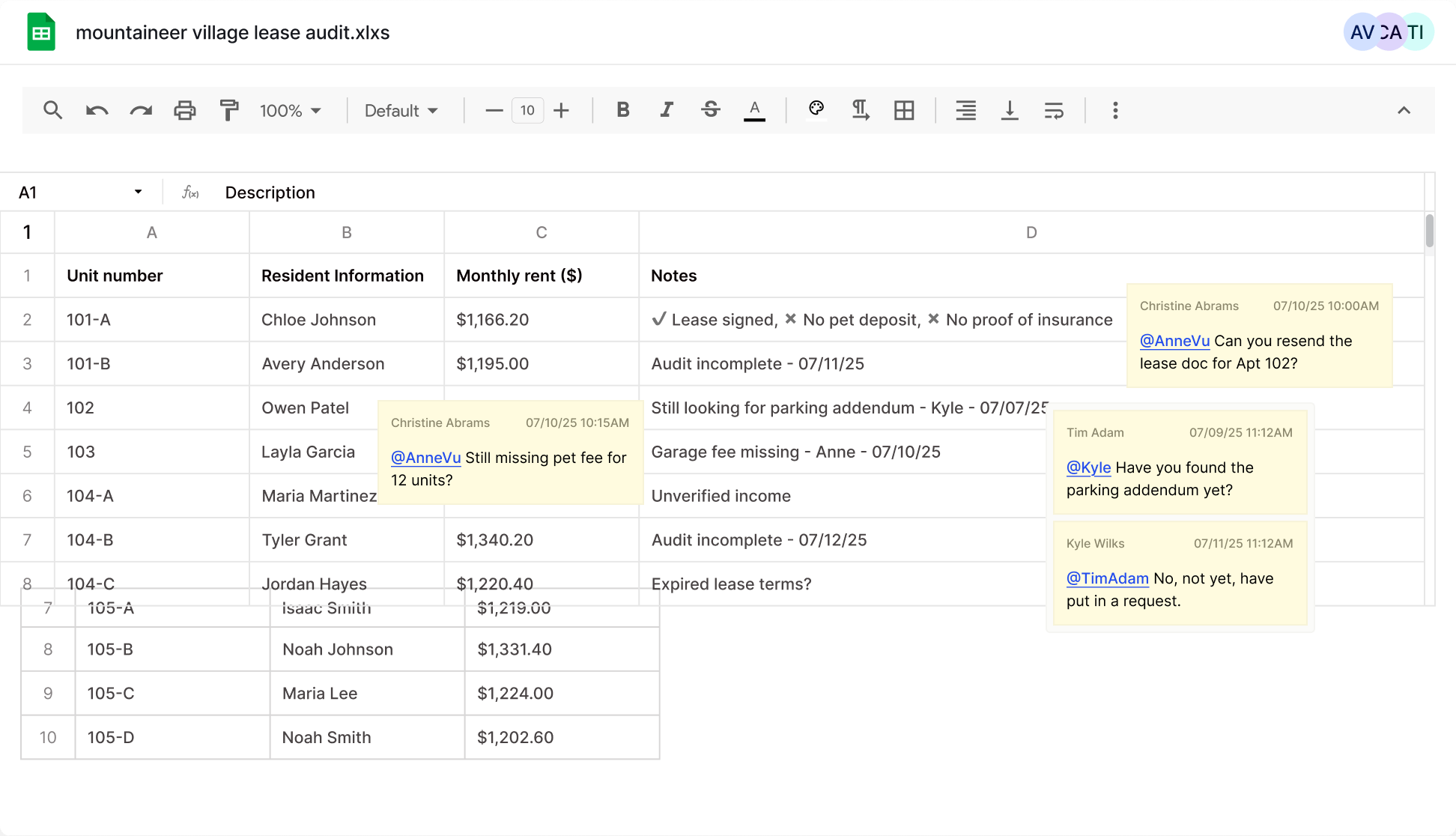
Many real estate asset management reports are still built through exported spreadsheets, manual consolidations, delayed monthly closes, email attachments, and disconnected property systems.
This creates common problems: stale data, inconsistent metrics, time-consuming preparation, and reduced confidence in decisions.
By the time some real estate asset management reports are distributed, the underlying conditions may have already changed.
Core Types of Real Estate Asset Management Reports
1. Monthly Ownership Report
Usually includes financial performance, occupancy updates, major leasing wins or risks, and capex updates.
2. Quarterly Strategic Review
Used for hold/sell analysis, refinancing considerations, and market repositioning decisions.
3. Portfolio Dashboard Reporting
Designed for groups managing multiple assets.
Includes side-by-side asset performance, regional comparisons, and trend monitoring.
4. Acquisition Transition Reporting
Focused on newly acquired assets.
Tracks lease file accuracy, operational gaps, transition milestones, and revenue recovery opportunities.
Real Estate Asset Management Report Template: What Good Looks Like
A useful real estate asset management report template should answer five executive questions quickly.
1. Are We Performing to Plan?
Budget vs actuals, occupancy, rent growth, NOI.
2. Where Are the Risks?
Delinquency, lease inconsistencies, expense spikes, compliance issues.
3. Where Is the Upside?
Renewal pricing, operational efficiencies, revenue recovery.
4. What Requires Action?
Clear priorities, owners, timelines.
5. What Changed Since Last Report?
Movement matters more than static snapshots.
Real Estate Financial Reporting Is Becoming Continuous
Historically, reporting was periodic.
Now leadership teams increasingly expect faster access to information.
Modern systems support live dashboards, automated variance alerts, portfolio-wide rollups, and faster month-end visibility.
This shift is why searches like best asset management software real estate financial reporting 2025 continue to grow.
Operators want systems that reduce lag between reality and reporting. For an overview of the best asset management software real estate with financial reporting, the strongest platforms share common traits. They combine property system integrations, centralized data models, and anomaly detection in one connected environment.
Data-powered reporting and management are transformative. They give leadership quick, accurate information they can act on. PwC documents how this creates a foundation for future growth →
Best Asset Management Software for Real Estate Financial Reporting
The strongest platforms for best asset management software real estate financial reporting 2025 share several traits. They combine property system integrations, centralized data models, dashboard reporting, workflow accountability, and anomaly detection.
There is rarely one all-in-one answer.
Many institutional groups use multiple tools. PMS handles system-of-record data. BI tools power dashboards. Specialized intelligence layers handle validation and controls.
Where SurfaceAI Fits Into Asset Reporting
SurfaceAI supports real estate asset reporting by improving trust in the underlying operational data.
Many real estate asset management reports depend on lease and property records being accurate.
If lease charges, concessions, or resident records are wrong, downstream reporting can also be wrong.
SurfaceAI validates lease data and identifies discrepancies between source documents and PMS records. It surfaces revenue leakage. It highlights operational risks before reporting cycles run.
That means asset managers can work with stronger inputs and more reliable portfolio insights.
For related controls, see lease auditing and automation systems →

Automated Asset Reporting and Portfolio Insights
The next generation of real estate asset management reporting focuses on automation.
That includes scheduled executive dashboards, exception-based alerts, cross-property comparisons, predictive trend signals, and fewer manual spreadsheets.
Executives want visibility without waiting on manual reporting cycles. This is driving demand for best real estate software automated asset reporting portfolio insights 2025.
Over 90% of real estate companies rely on fair value models. Alternative performance measures are now widely used to give investors clearer views of asset performance. EY’s global real estate financial reporting survey documents both findings in detail →
Metrics That Matter Most to Ownership Groups
Every owner prioritizes different metrics. Common priorities in any asset management report real estate include:
- NOI growth
- Occupancy health
- Rent collections
- Bad debt exposure
- Expense control
- Capex ROI
- Portfolio concentration risk
- Leasing pipeline strength
Strong real estate asset management reports simplify these into decision-ready views.
How to Improve Your Current Reporting Process
Ask these questions:
- How many manual steps build each report?
- How old is the data when leadership receives it?
- Are metrics consistent across assets?
- Can risks be identified before month-end?
- Is there confidence in lease-level inputs?
If the answers are weak, the reporting stack likely needs modernization.
Key Takeaway
Real estate asset management reporting is no longer just about summarizing last month.
It is about giving leadership timely visibility into current performance, emerging risks, portfolio opportunities, and strategic decisions.
The firms that modernize real estate asset management reports often make faster and better capital decisions.
Conclusion
As portfolios grow, reporting complexity grows with them.
Manual spreadsheets and delayed updates create blind spots that ownership groups can no longer afford.
Modern asset management report real estate workflows combine automation, visibility, and stronger underlying data. They help leaders act faster and with more confidence.
Book a demo to see how SurfaceAI strengthens real estate asset management reporting workflows. See how it improves portfolio reporting, operational visibility, and trust in asset-level data.
Frequently Asked Questions About Real Estate Asset Management Reporting