Top AI Lease Audit Tools for Multifamily Ops

Lease errors rarely appear as one major problem.
They usually show up as dozens of small issues spread across a portfolio such as:
- Missing fees
- Incorrect charges
- Outdated concessions
- Unsigned documents
- Mismatched rent rolls
- Policy inconsistencies
each one easy to miss individually.
Individually, they may seem minor. Across thousands of units, they can materially impact NOI, compliance exposure, and reporting confidence.
That is why multifamily operators are increasingly adopting multifamily lease audit software powered by AI.
These platforms help teams move away from periodic manual reviews. They enable real-time compliance monitoring, automated lease audit workflows, and continuous revenue leak detection. Housing operators use AI platforms to improve accuracy and combat fraud in the leasing process. They also use them to overcome labor market challenges.
AI and technology are being utilized across the multifamily space. Use cases range from resident screening to operational cost reduction. NMHC documents the full scope of how the industry is adopting these tools →
For broader operations context, see multifamily property management software systems →
What Is Multifamily Lease Audit Software?
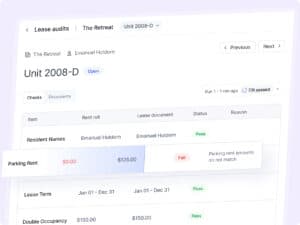
Multifamily lease audit software is designed to review lease data, charges, documents, and operational records to identify discrepancies that affect revenue or compliance.
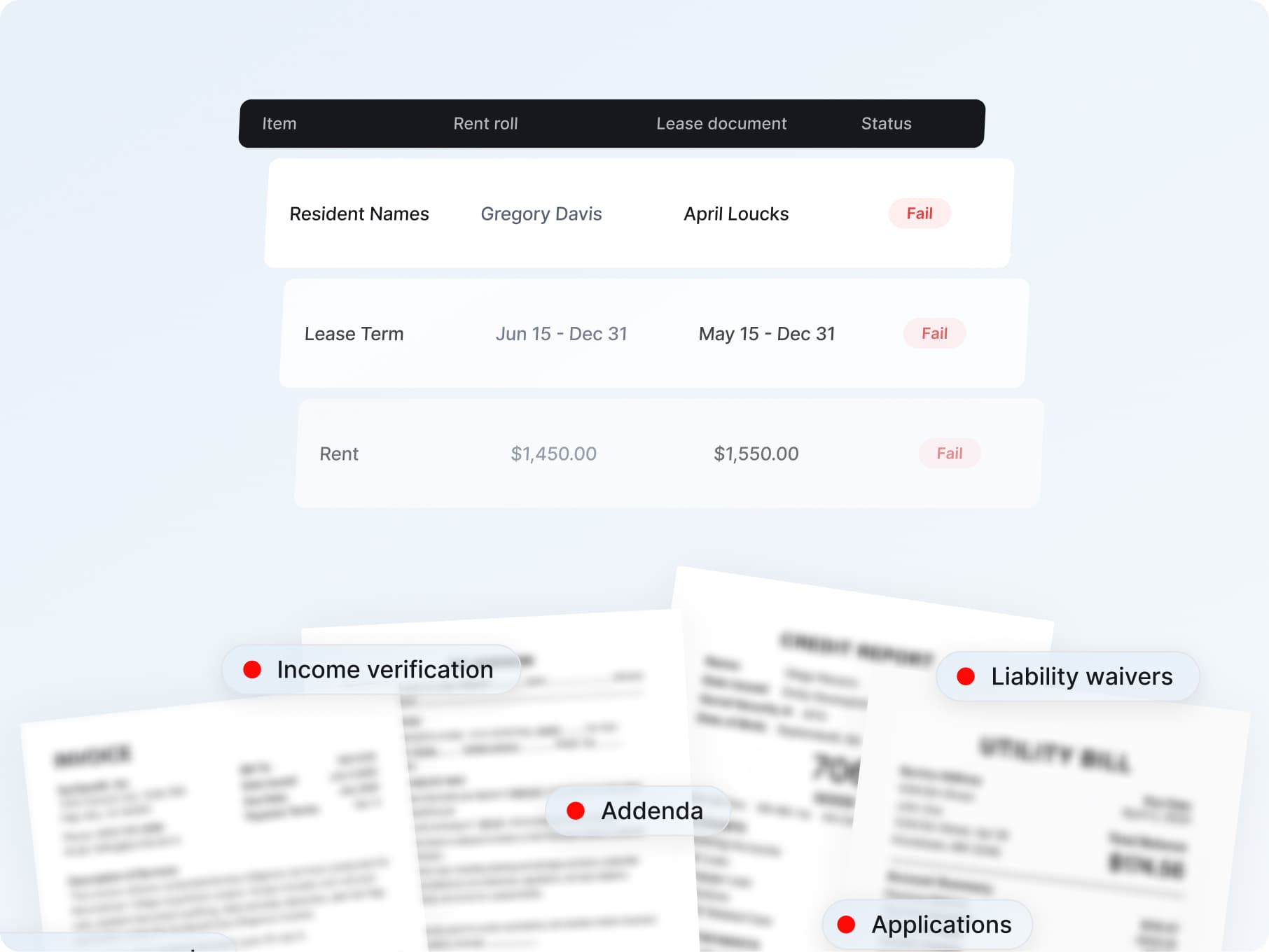
These systems detect incorrect rent amounts, missing fees, and expired concessions. They also catch unsigned lease documents and mismatches between PMS data and source leases. Inconsistent lease terms across properties are flagged as well.
Traditional audits are often periodic. Modern AI lease auditing tools aim to make auditing continuous.
What To Look For in AI Lease Auditing Tools
Before comparing platforms, multifamily leaders should evaluate tools against practical criteria.
Real-Time Compliance Monitoring
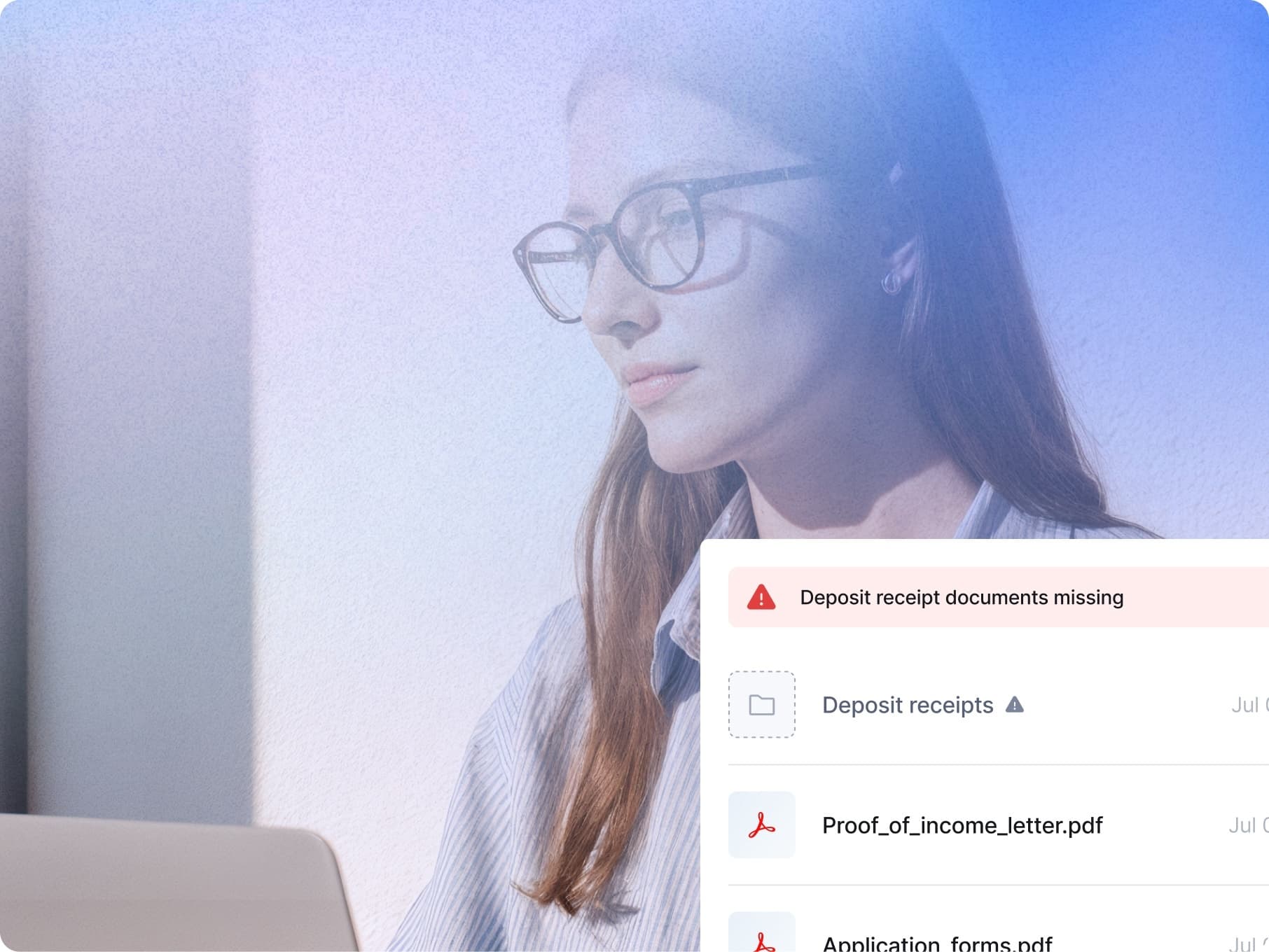
Can the system continuously flag missing signatures, expired addenda, or policy exceptions?
Property Management Software Integration
Does it integrate with existing PMS environments rather than forcing replacement?
Revenue Leak Detection
Can it identify recurring missed charges and underbilling across the portfolio?
Automated Lease Audit Workflows
Does it route findings to teams and track resolution?
Multifamily Portfolio Auditing Scalability
Can it handle thousands of leases across multiple communities?
Top AI Lease Audit Tools for Multifamily Ops
1. SurfaceAI
Best for operators who need continuous lease validation, property management software integration, and revenue leak detection across multifamily portfolios.
SurfaceAI is purpose-built for multifamily operations. It turns lease audits into an always-on control function. It is not a one-time project, it runs continuously.
Strengths:
- AI review of lease files and supporting documents
- comparison of lease terms against PMS records
- real-time compliance monitoring
- revenue leak detection across fees, charges, and concessions
- automated lease audit workflows for issue resolution
- portfolio-wide visibility for operations leaders
SurfaceAI fits especially well for owners and operators seeking stronger controls without replacing existing systems.
Related capability: lease auditing and automation systems →

2. Traditional PMS Native Audit Reports
Best for teams needing basic internal reporting inside existing systems.
Many property management software platforms offer native reports for rent roll review, lease expirations, and exception checks.
Strengths:
- already inside current PMS workflows
- no separate vendor onboarding
- useful for basic controls
Limitations:
- often reactive rather than continuous
- dependent on data already entered correctly
- limited document-level review
These can be useful starting points but may not provide full automated lease audit workflows.
3. BI + Analytics Stack
Best for larger organizations with internal analytics teams.
Some operators use business intelligence tools connected to PMS exports to build custom lease audit dashboards.
Strengths:
- customizable metrics
- portfolio-wide reporting
- flexible executive dashboards
Limitations:
- requires internal resources
- data refresh delays
- limited document intelligence unless paired with other tools
This route can work for sophisticated organizations but often needs multiple systems.
4. Generic OCR + Document AI Platforms
Best for organizations trying to digitize documents broadly.
Some enterprises deploy generic document AI tools to extract lease data from PDFs and scanned files.
Strengths:
- broad document processing capability
- useful for legacy archives
- supports multiple file formats
Limitations:
- not multifamily-specific
- requires configuration
- may not understand lease logic, fee structures, or PMS workflows
Useful for digitization, but not always ideal as standalone multifamily lease audit software.
5. Consulting-Led Manual Audit Programs
Best for one-time cleanup projects.
Some operators hire consultants or temporary teams to review lease files manually.
Strengths:
- human review of nuanced issues
- useful after acquisitions or transitions
Limitations:
- expensive at scale
- slow turnaround
- not continuous
This approach often solves yesterday’s issues rather than preventing tomorrow’s ones.
Which Option Is Best for Multifamily Operations Leaders?
The answer depends on priorities if you need:
Continuous Oversight – Use a platform designed for always-on auditing and issue resolution.
Basic Internal Checks – Native PMS reporting may be enough.
Executive Reporting – A BI layer can help.
Legacy File Cleanup – OCR-focused tools may support the project.
One-Time Review – Manual audits may fit short-term needs.
Many organizations ultimately combine multiple approaches.
Why Revenue Leak Detection Matters More Than Teams Realize
Lease issues often compound quietly.
Common examples include parking fees never activated and renewal rents not updated. Pet fees go missing on occupied units. Concessions run longer than agreed. Utility bill-backs get applied inconsistently.
Across a large portfolio, these issues can materially impact NOI.
That is why revenue leak detection is becoming a board-level concern rather than only an onsite issue. AI is helping multifamily operators cut costs and detect fraud. Technology is reshaping how owners and managers approach portfolio oversight. NAR documents how this shift is playing out at scale across the multifamily industry →
For financial impact context, see NOI in real estate operations →
Why PMS Integration Is Critical
Operators do not want another disconnected dashboard.
Strong multifamily lease audit software must support property management software integration. Findings need to tie back to operational workflows. Without that connection, remediation slows down.
That means connecting to existing PMS environments, validating data already in use, reducing duplicate work, and supporting faster remediation.
This is one reason SurfaceAI’s positioning as an intelligence layer resonates with multifamily teams.
The Shift From Periodic Audits to Continuous Monitoring
Historically, lease audits happened quarterly, annually, during ownership transitions, or after major issues surfaced.
Modern operators are shifting toward continuous controls because waiting months to discover errors is expensive.
Real-time compliance monitoring allows issues to be identified closer to the source. New AI technologies are forcing compliance professionals to rethink existing operational models. Continuous monitoring is replacing reactive audit cycles. EY documents why this shift is accelerating across regulated industries →
How to Evaluate a Vendor Before Buying
Ask these questions:
- How does the platform detect lease discrepancies?
- Which PMS systems does it integrate with?
- How are findings assigned and resolved?
- Can it scale across our entire portfolio?
- Does it review source documents or only system exports?
- What measurable revenue recovery or risk reduction is typical?
These answers matter more than flashy demos.
Key Takeaway
The best multifamily lease audit software is not just a reporting tool.
It should help operators detect revenue leaks, strengthen compliance, integrate with current systems, automate remediation workflows, and scale oversight across the portfolio.
As portfolios grow, lease auditing is becoming a continuous operational discipline.
Conclusion
Multifamily operators are under pressure to protect NOI, maintain compliance, and run leaner teams.
Manual lease reviews and static reports are often too slow for today’s environment.
AI lease auditing tools give leadership teams faster visibility into issues that would otherwise remain hidden.
Book a demo to see how SurfaceAI supports continuous multifamily portfolio auditing. See how it improves lease accuracy, strengthens controls, and reduces revenue leakage across your portfolio.
Frequently Asked Questions About Top AI Lease Audit Tools for Multifamily Ops