AI Features in Property Management Software for Modern Real Estate Operations

Property management software has historically focused on storing and processing data.
Leases, rent rolls, maintenance requests, and financial records all live inside these systems. But as portfolios scale, storing data is no longer enough.
Operators now need systems that can:
- Interpret data
- Identify issues
- Automate workflows
- Surface insights in real time
This shift is driving the adoption of AI features in property management software.
Artificial intelligence is not replacing existing systems. It is enhancing them, adding a layer of intelligence that transforms how operators manage properties.
For a broader view of how software systems operate across portfolios, see property management software solutions and system architecture →
What Are AI Features in Property Management Software?
AI features in property management software are capabilities that use machine learning, automation, and data processing. They improve operational workflows across leasing, maintenance, and financial management.
These features go beyond basic automation.
They enable systems to:
- Analyze patterns
- Detect anomalies
- Predict outcomes
- Execute tasks with minimal human input
This is the difference between traditional software and AI-powered property management software. 90.1% of companies expect AI to support human experts in real estate activities over the next five years. Over 60% have already started piloting different AI use cases in their real estate functions.
Over 500 companies now provide AI-powered services to real estate. A solid foundation for AI integration across the industry is in place. JLL documents both findings in detail →

Core AI Applications in Property Management
AI applications in property management can be grouped into several functional areas.
Workflow Automation
AI-driven workflow automation handles repetitive operational tasks such as:
- Lease processing
- Task assignment
- Communication triggers
Unlike basic automation, AI systems can adapt workflows based on data.
This builds on concepts explored in property management workflow automation, but extends them into intelligent execution.
Predictive Analytics and Forecasting
AI-powered systems can analyze historical data to predict:
- Occupancy trends
- Rent performance
- Maintenance demand
This helps operators make proactive decisions rather than reactive ones.
Leasing and Communication Automation
AI tools can:
- Respond to tenant inquiries
- Schedule tours
- Assist with leasing workflows
These systems reduce workload for leasing teams. One platform active in one out of every 12 multifamily apartment units in the U.S. used AI agents to cut lead-to-lease timelines by 65%. It also increased conversion rates by 8%.
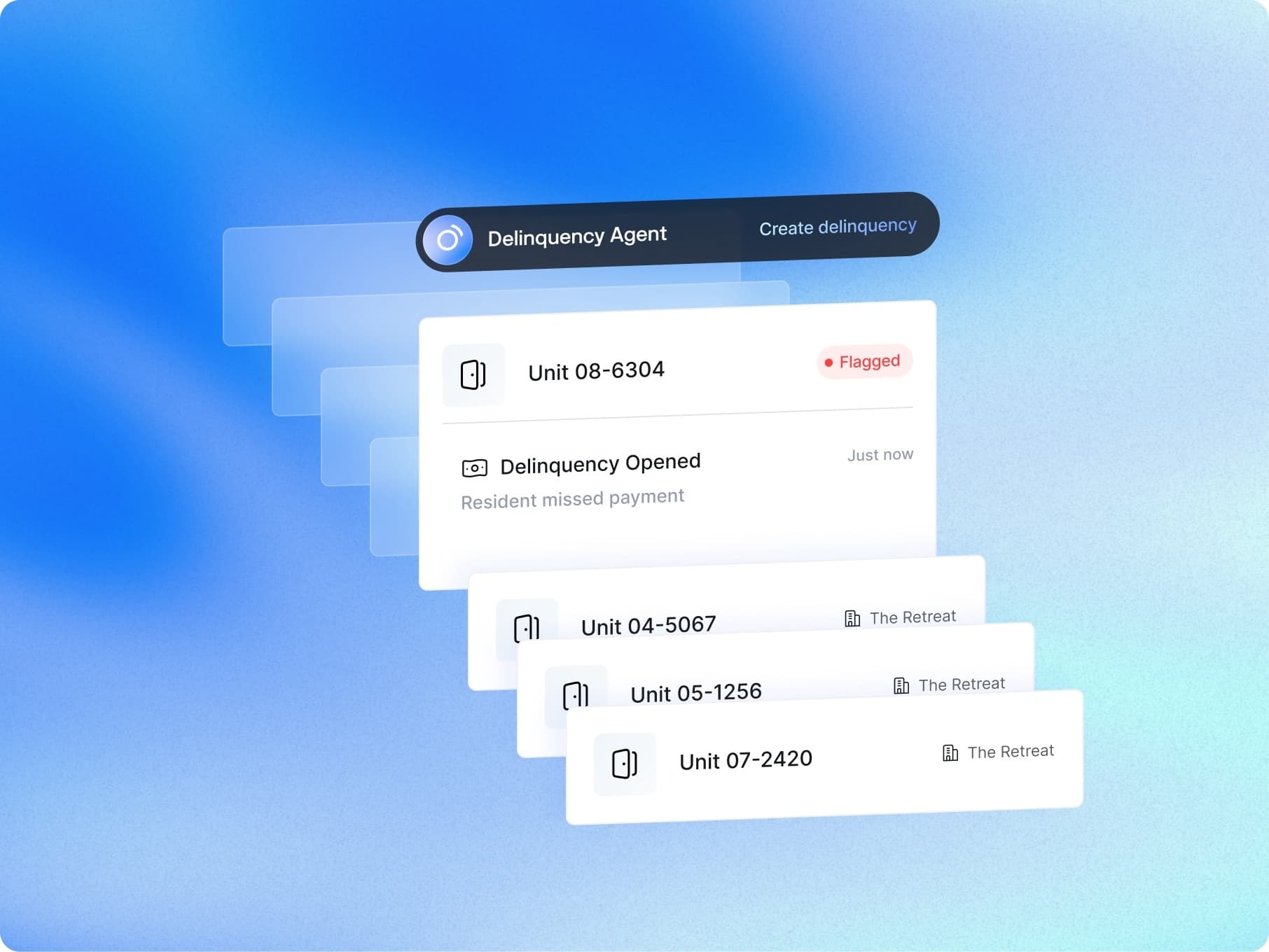
The shift is from chatbots to autonomous agents. These systems assign themselves tasks, oversee completion, and flag problems. PwC documents how this is reshaping end-to-end property management workflows →
Maintenance Optimization
AI can improve maintenance workflows by:
- Predicting service needs
- Prioritizing work orders
- Optimizing vendor assignments
This improves efficiency across operations.
AI Software for Rental Property Operations
AI software for rental property operations focuses on improving day-to-day execution.
This includes:
- Automating routine tasks
- Improving communication
- Streamlining workflows
These systems are particularly valuable for:
- Large portfolios
- Distributed teams
- High-volume operations
Through 2024, investors tested AI across four operational areas. These were automating routine tasks, optimizing service delivery, simplifying data for risk monitoring, and improving data queries. JLL documents how this focus is now shifting toward revenue generation and growth →
AI Integration with Property Management Software
Most operators already use property management platforms.
The question is not whether to replace them, but how to enhance them.
AI integration with property management software allows operators to:
- Connect AI tools to existing systems
- Layer intelligence on top of current workflows
- Avoid full system replacement
This creates a more flexible and scalable architecture.
AI Powered Property Management Software
AI powered property management software combines traditional functionality with intelligent capabilities.
These systems can:
- Process large volumes of data
- Automate workflows
- Generate insights
However, the effectiveness of these systems depends on data quality. 77% of organizations report some level of technology maturity in their CRE operations. None have achieved the highest level. The growth potential is significant.
Demand is growing for AI-driven solutions that adapt to dynamic operational needs. Rigid legacy platforms are no longer enough. CBRE documents this shift across its global workplace and occupancy research →
Best Automated Rental Management Systems with AI Capabilities
The best automated rental management systems with AI capabilities share common traits:
- Strong integration with existing platforms
- Ability to handle large datasets
- Automation of complex workflows
- Real-time insights
Operators should evaluate systems based on how they perform under real operational conditions.
Where Traditional AI Features Fall Short
Many AI tools focus on:
- Communication automation
- Predictive analytics
- Workflow efficiency
While these are valuable, they do not address a critical issue: data accuracy.
Most systems assume that the data they process is correct.
In reality:
- Lease data may contain errors
- Financial records may be inconsistent
- Documents may not align with system data
Without addressing this, AI can amplify existing problems.
The Role of Data Validation in AI-Driven Property Management
As AI adoption increases, data validation becomes more important.
Operators need systems that can:
- Verify lease accuracy
- Detect discrepancies
- Ensure consistency across systems
This shifts AI from automation to intelligent oversight. 92% of companies had initiated AI pilots by mid-2025. Real estate data-related workflows ranked as the number one use case. JLL documents why data accuracy is the foundational requirement for any AI deployment →
How SurfaceAI Fits Into AI Property Management Workflows
SurfaceAI operates within this validation and intelligence layer.
Many AI tools focus on automation or communication. SurfaceAI focuses on the data driving those systems. It ensures that data is accurate before any workflow runs.
This includes:
- Analyzing lease documents
- Validating rent roll data
- Identifying inconsistencies
- Surfacing operational risks
This capability strengthens the effectiveness of AI-powered property management software.
For example, workflows described in lease audit and automation systems depend on accurate underlying data.
SurfaceAI ensures that these systems operate on reliable information.

“I’ve been thoroughly impressed with the Surface AI lease audit product. It’s exceptionally user-friendly, and the audit results are clear, concise, and easy to interpret. The impact on our student teams has been tremendous—what once took several days can now be completed in just a few hours. The tool also makes it simple to identify and address issues efficiently. I can’t speak highly enough about the value this product brings.”
Amanda Pour, Operations Compliance Manager
Artificial Intelligence for Property Management at Scale
Artificial intelligence for property management is most valuable at scale.
In large portfolios, operators must manage:
- Thousands of leases
- Complex financial data
- Multiple systems
AI enables:
- Faster decision-making
- Reduced manual workload
- Improved operational visibility
But only when combined with accurate data and structured workflows.
The Future of AI in Property Management Software
AI is shifting property management from reactive operations to proactive control.
Future systems will focus on:
- Real-time anomaly detection
- Automated compliance monitoring
- Continuous data validation
- Integrated decision-making
This evolution is already underway.
Operators adopting AI today are building more resilient and scalable operations.
Key Takeaway
AI features in property management software are transforming how real estate operations are managed.
They enable:
- Automation
- Analytics
- Improved efficiency
However, their effectiveness depends on data accuracy and system integration.
Operators who combine AI capabilities with strong data validation and workflow alignment will see the greatest impact.
Conclusion
Property management software is no longer just about managing data.
It is about understanding and acting on that data in real time.
AI features bring new capabilities to property operations, but they must be implemented thoughtfully.
Book a demo to see how SurfaceAI fits into modern AI-driven workflows. See how it ensures data accuracy and operational control across your property management systems.
Frequently Asked Questions About AI Features in Property Management Software

Related content