
AI Real Estate Deal Analyzer: What to Look For

Real estate deal analysis has often meant spreadsheets, manual data entry, and hoping nothing slips through the cracks.
For acquisition teams reviewing hundreds of unit on tight deadlines, that approach creates real risk. It can lead to missed revenue and undisclosed concessions. Resident risk factors may surface only after the wire transfer clears.
AI deal analyzers change the equation by:
- Automating data extraction from rent rolls and lease documents
- Flagging financial and compliance red flags
- Compressing due diligence from days to hours
This article covers:
- How these tools work
- What features matter most
- How investors and underwriting teams can use AI to make faster, more confident acquisition decisions
What Is an AI Real Estate Deal Analyzer
An AI real estate deal analyzer is a software that uses machine learning to evaluate investment properties. It extracts and analyzes data from rent rolls, leases, and financial documents.
Instead of manual data entry into spreadsheets, AI deal analyzers ingest:
- Unstructured files
- Scanned PDFs
- Lease addenda
- Email attachments
- Pulls out the numbers and terms that matter for underwriting decisions.
AI deal analyzers read the source documents directly. They cross-reference the data automatically. They flag inconsistencies before your team knows to look for them.
AI deal analyzers typically deliver three core capabilities:
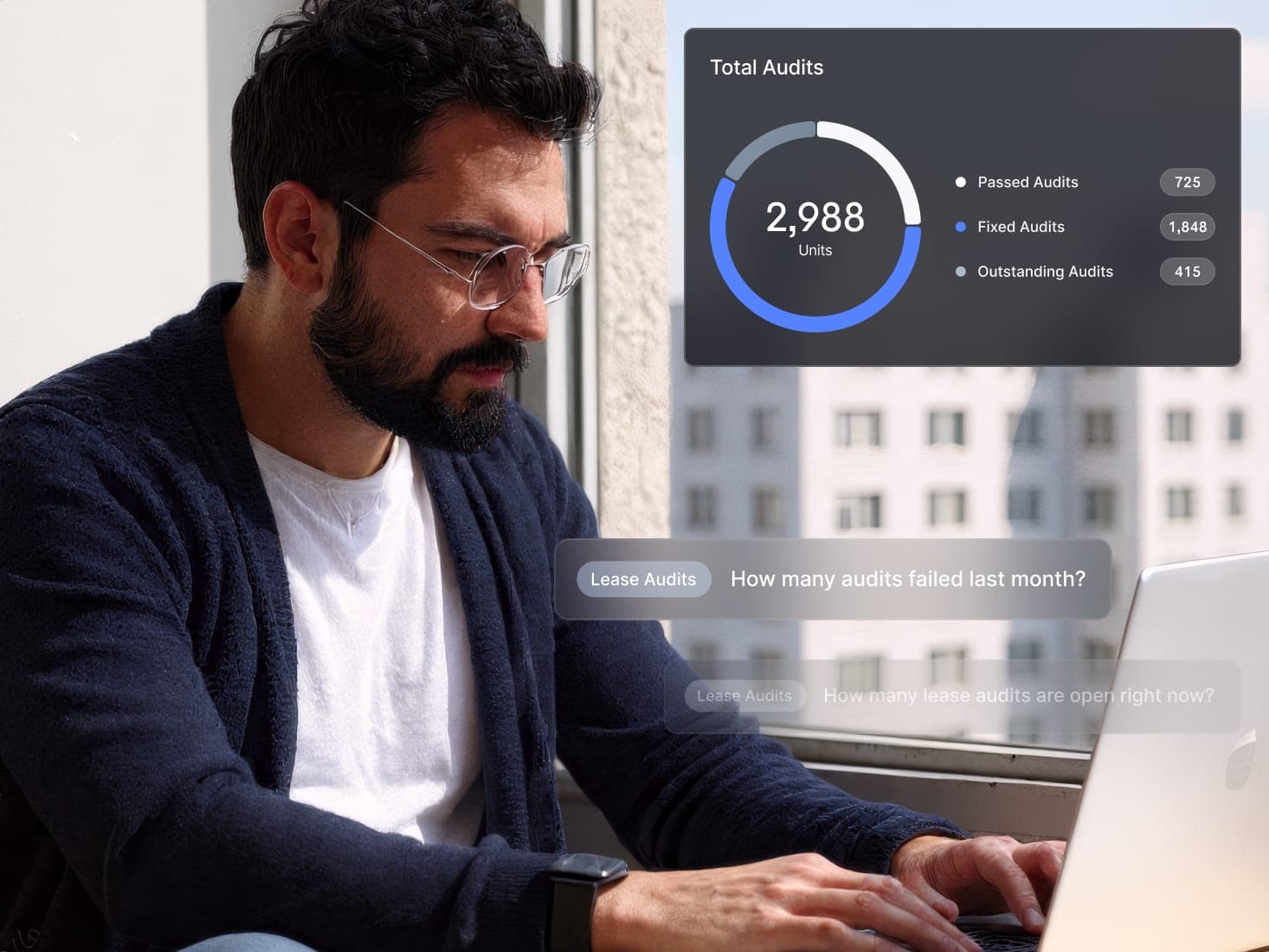
- Data extraction: Automatically pulls figures from PDFs, rent rolls, and lease documents using optical character recognition and document parsing
- Risk detection: Flags financial anomalies, resident risk factors, and compliance gaps based on configurable rules
- Workflow automation: Routes findings to team members for action rather than generating static reports
Live deal analysis means data is validated continuously as documents change throughout the transaction. That is what separates advanced platforms from basic tools. 61% of real estate firms cite faster deal evaluation and closing as the primary expected ROI from AI adoption.
(Reference: Commercial Observer →)
See how automation improves evaluation speed in Property Management Workflow Automation →
Key Features to Look for in a Real Estate Deal Analyzer
Not all deal analyzers offer the same capabilities. Basic tools provide calculators for ROI and cash flow. Enterprise platforms automate extraction, flag risks, and connect to operational systems. The difference matters when evaluating which tool fits your workflow.
Feature |
Basic Deal Analyzer |
AI-Powered Deal Analyzer |
|---|---|---|
| Data input | Manual entry | Automated extraction |
| Analysis type | Static calculations | Continuous monitoring |
| Risk detection | User-defined only | AI-flagged anomalies |
| Workflow integration | Export to spreadsheet | Task assignment and PMS sync |
Continuous Monitoring vs One-Time Analysis
Most deal analyzers run once and produce a static output. Advanced tools audit continuously as data changes. This distinction matters because deal data evolves. Sellers provide updated rent rolls. New leases get signed during due diligence. Corrections arrive throughout the process.
Live deal Analysis catches changes that one-time analysis misses. It also extends value beyond acquisition into ongoing operations, where lease discrepancies and compliance gaps continue to emerge.
Resident-Level Risk Assessment
Financial analysis alone does not capture the full picture. Resident-level risk assessment examines demographic and behavioral signals, employment status, payment history, prior evictions, bankruptcy records, that indicate future performance.
A property might show strong current collections while harboring residents with deteriorating credit or employment situations. AI surfaces resident-level risks before they become collection problems.
Integration with PMS and Cloud Storage
The most useful deal analyzers connect directly to property management systems like Yardi, RealPage, and AppFolio. They also connect to cloud storage platforms like OneDrive and SharePoint. Direct integration eliminates manual uploads and ensures analysis reflects current system records.
Without integration, teams spend hours preparing data for analysis, time that could go toward reviewing findings and making decisions.
Permission-Aware Access and Data Security
Lease and resident data is sensitive. Reputable AI platforms use encryption, role-based permissions, and audit trails to protect information. Before adopting any platform, teams benefit from verifying SOC 2 compliance or equivalent security certifications.
Why Investors and Underwriting Teams Need AI for Deal Analysis
The pace of real estate transactions has changed. CBRE forecasts CRE investment activity to reach $562 billion in 2026, and buyers who move slowly lose deals. Meanwhile, portfolios have grown larger, and the cost of discovering problems after closing has increased. AI addresses all three pressures simultaneously.
Compressed Timelines from LOI to Close
Deal velocity has accelerated across most markets. When a letter of intent is signed, the clock starts ticking.
Hundreds of units may require analysis within days. Manual lease-by-lease review cannot keep pace. This constraint is driving the shift toward automated due diligence across multifamily acquisitions.
Real estate underwriting software powered by AI compresses timelines. Days of manual work become hours of automated processing. Teams review flagged exceptions rather than reading every document, which means faster decisions without sacrificing thoroughness.
The difference between closing in two weeks versus four weeks often determines whether you win the deal at all.
Reduced Manual Error and Revenue Leakage
Spreadsheet-based audits miss things. Rent amounts that do not match lease terms. Charges that were never applied. Concessions that exceed what was disclosed. Under time pressure, even experienced analysts overlook discrepancies that AI catches consistently.
Revenue leakage from billing errors and missed charges can reach 1-3% of gross potential rent. This applies to portfolios without systematic audit processes. The benchmark comes from the National Apartment Association.
On a 500-unit property at $1,500 average rent, that translates to $90,000-$270,000 in annual revenue at risk.
Scalable Due Diligence Across Large Portfolios
A 50-unit acquisition might be manageable with manual review. A 500-unit portfolio acquisition is not. AI enables consistent analysis across hundreds or thousands of units without proportional increases in staff time or audit costs.
The alternative, hiring temporary staff or accepting less thorough review, introduces risk that compounds as portfolios expand. Operators pursuing growth strategies find that manual processes become the bottleneck.
How AI Enhances Real Estate Underwriting
AI transforms underwriting by automating the most time-consuming steps:
Workflow |
Traditional Process |
With AI |
|---|---|---|
| Lease Review | Manual reading of PDFs and rent rolls | SurfaceAI Due Diligence Agent scans thousands instantly |
| Risk Identification | Spreadsheet-based assumptions | AI flags missing clauses, unusual concessions |
| Revenue Forecasting | Static formulas | Predictive modeling learns from market data |
| Validation | Cross-checking by analysts | AI auto-verifies data against source documents |
These efficiencies allow acquisition teams to focus on strategy instead of document management.
SurfaceAI: The Automation Layer for Real Estate Investors
While many AI deal analyzer tools visualize data, SurfaceAI goes deeper, it automates the inputs themselves.
-
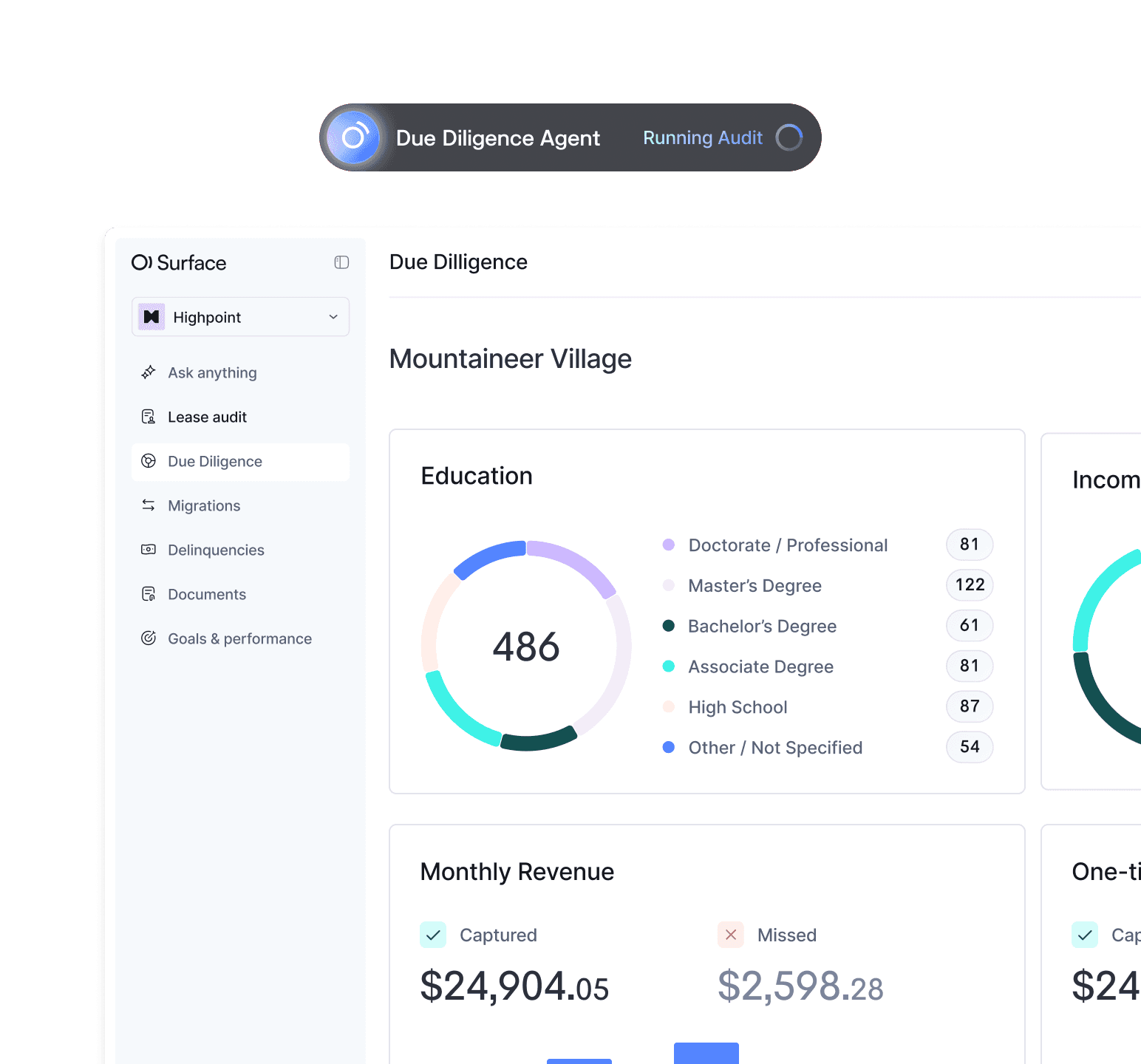
Due Diligence Agent: Reviews leases and rent rolls automatically, identifying inconsistencies and risk factors.
-
Lease Audit Agent: Runs continuous checks across owned portfolios post-acquisition.
-
Delinquency Agent: Tracks payments and anomalies to protect NOI.
SurfaceAI connects your existing underwriting models to your raw data. It feeds clean, verified information directly into your deal models.
Learn more about the platform in Real Estate AI →
Real-World Applications of AI Deal Analyzers
Understanding where AI fits into existing workflows helps teams plan implementation and set expectations.
Acquisition Due Diligence and Pre-Close Risk Review
Acquisition teams use AI-powered real estate deal analysis tools to validate seller-provided data. They surface discrepancies. They identify hidden revenue leakage before closing.
Common findings include rent amounts that do not match lease terms, charges that were never applied, and concessions that exceed what was disclosed. Each finding represents either recovered value or avoided overpayment.
Property Takeovers and Transition Audits
New management inheriting a property often faces messy files, incomplete documentation, and unclear resident status. AI provides instant visibility into lease accuracy and resident risk without weeks of manual file review.
Transition audits are especially valuable for third-party managers taking over distressed assets or portfolios from underperforming operators. The faster you understand what you have inherited, the faster you can address problems.
Ongoing Lease Audit and Compliance Monitoring
AI deal analysis does not stop at close. The same capabilities that support acquisition due diligence extend into ongoing operations, continuous monitoring for lease discrepancies, compliance gaps, and revenue leakage.
SurfaceAI’s Lease Audit Agent runs continuously. It catches issues the moment they appear. It does not wait for periodic audits.
Best Practices to Maximize AI Deal Analysis Results
Adopting AI deal analysis requires some preparation to achieve full value. Teams that follow a few key practices see faster implementation and better outcomes.
1. Centralize Data Before Running Analysis
AI performs best when rent rolls, leases, and supporting documents are consolidated in connected storage or property management systems. Scattered files across email attachments, local drives, and disconnected folders slow analysis and increase the chance of missing documents.
2. Define Red Flag Thresholds Aligned to Investment Criteria
Not every anomaly matters equally. Teams benefit from configuring what counts as a flag. This includes delinquency over a set number of days, concessions exceeding policy limits, and specific resident risk factors. Configuration should align with investment criteria and risk tolerance.
3. Connect AI Insights to Operational Workflows
Analysis without action is wasted effort. The most effective implementations connect AI findings directly to task assignment and resolution tracking. Flagged issues become assigned work items with owners and deadlines, not just report line items.
Smarter Deal Analysis Starts with the Right AI Platform
AI deal analyzers don’t just model deals.
They ensure the data behind those models is accurate.
The right platform combines automated extraction, continuous monitoring, and workflow integration. It connects to:
- existing systems
- flags risks based on configurable criteria
- routes findings to the people who can act on them.
For multifamily operators and acquisition teams, the question has changed. It is no longer whether to adopt AI deal analysis. It is which platform matches their workflow and scale.
Book a demo to see how SurfaceAI’s Due Diligence Agent automates deal analysis for multifamily investors.
Frequently Asked Questions about AI Real Estate Deal Analyzer

Related content