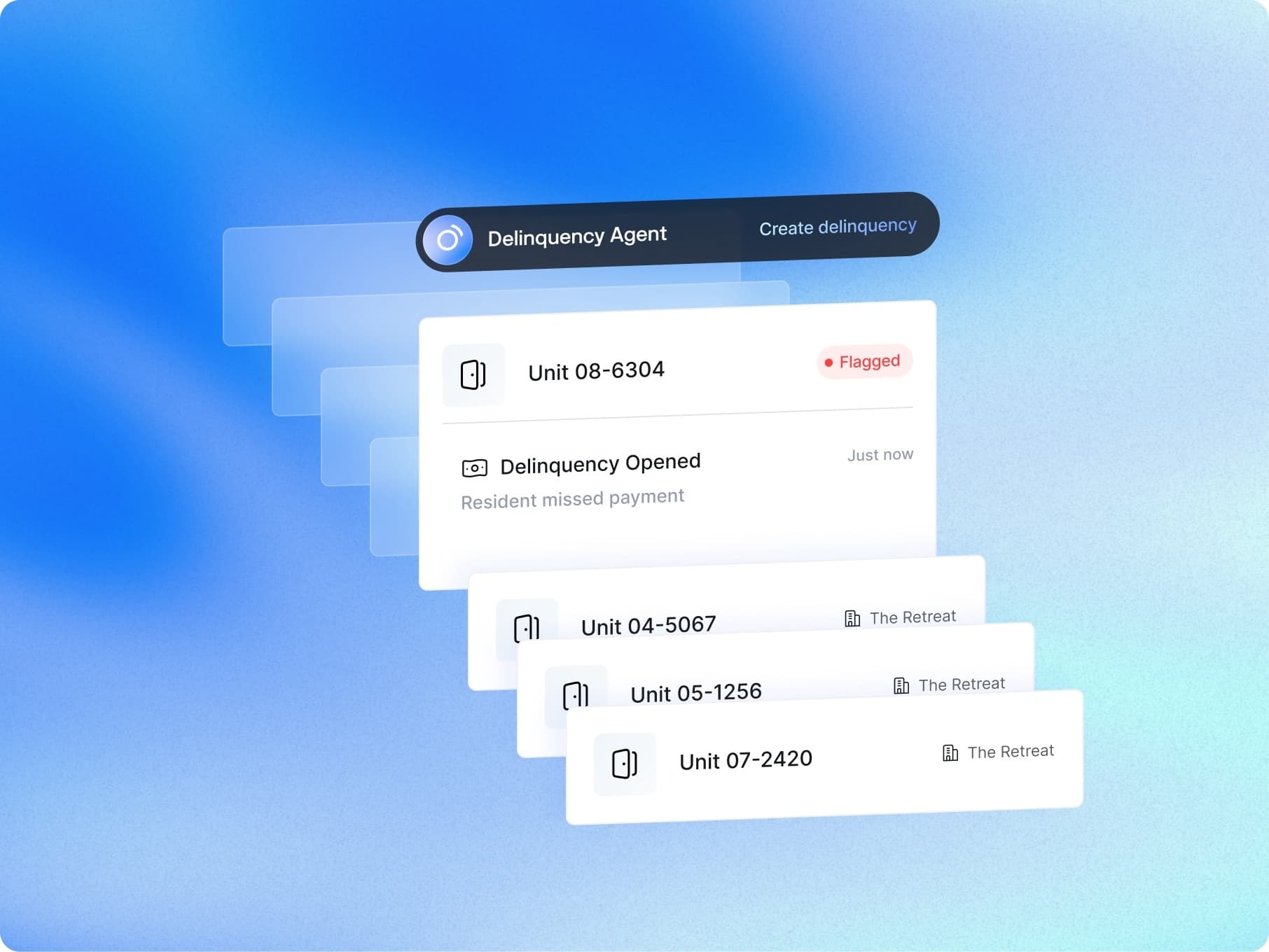
How AI Property Analysis Is Changing Real Estate Deal Evaluation

Real estate deal analysis doesn’t break at the modeling stage.
It breaks much earlier, at the data layer.
Most underwriting workflows assume:
- rent rolls are accurate
- lease terms are reflected correctly
- financial inputs match contractual reality
In practice, that assumption fails more often than teams expect.
Discrepancies between leases and rent rolls, missing charges, and undocumented concessions routinely surface after closing, not before.
AI property analysis shifts the focus from modeling outcomes to validating inputs, using document-level intelligence to ensure underwriting is based on what’s actually in the leases, not what’s assumed.
What Is AI Property Analysis
AI property analysis is the process of using machine learning to evaluate investment properties by automatically extracting and analyzing data from rent rolls, leases, and financial documents.
Rather than requiring manual data entry into spreadsheets, AI systems ingest:
- Unstructured files
- Scanned PDFs
- Lease addenda
- Email attachments
and pull out the numbers and terms that matter for underwriting decisions.
The distinction from traditional analysis tools is significant. Basic deal calculators ask you to type in rent amounts, expenses, and assumptions. AI systems read the source documents themselves, cross-reference the data, and flag inconsistencies before you even know to look for them.
How AI Analyzes Real Estate Deals
Understanding what happens under the hood helps teams evaluate tools and set realistic expectations. AI deal analysis follows a structured process from data ingestion through insight delivery.
Automated Data Extraction from Rent Rolls and Leases
The process begins with ingestion:
- AI systems accept structured data like rent roll exports alongside unstructured document, lease PDFs, addenda, notices, and supporting files.
- Optical character recognition (OCR) converts scanned documents into machine-readable text.
- Document parsing then identifies key fields: resident names, unit numbers, rent amounts, lease dates, and charge codes.
This extraction step eliminates the most time-consuming part of manual analysis. Instead of opening each file, finding the relevant information, and entering it into a spreadsheet, lease automation technology handles extraction automatically.
Financial and Demographic Red Flag Detection
Once data is extracted, AI applies rules and pattern recognition to identify anomalies. The specific flags depend on configuration, but common examples include:
- Rent amounts that do not match lease terms
- Residents with prior evictions or bankruptcies
- Unsigned or missing lease documents
- Out-of-policy concessions or lease terms
- Payment history indicating delinquency risk
- Occupancy patterns that suggest fraud or misrepresentation
Red flag detection surfaces issues that would otherwise require line-by-line comparison across multiple documents. Under typical deal timelines, that level of manual scrutiny rarely happens.
Workflow Automation from Insight to Task Assignment
Modern AI deal analyzers do more than generate reports. They assign tasks to staff, trigger follow-ups, and integrate into operational workflows. A flagged discrepancy becomes an assigned task with a deadline, not a line item in a PDF that someone might review later.
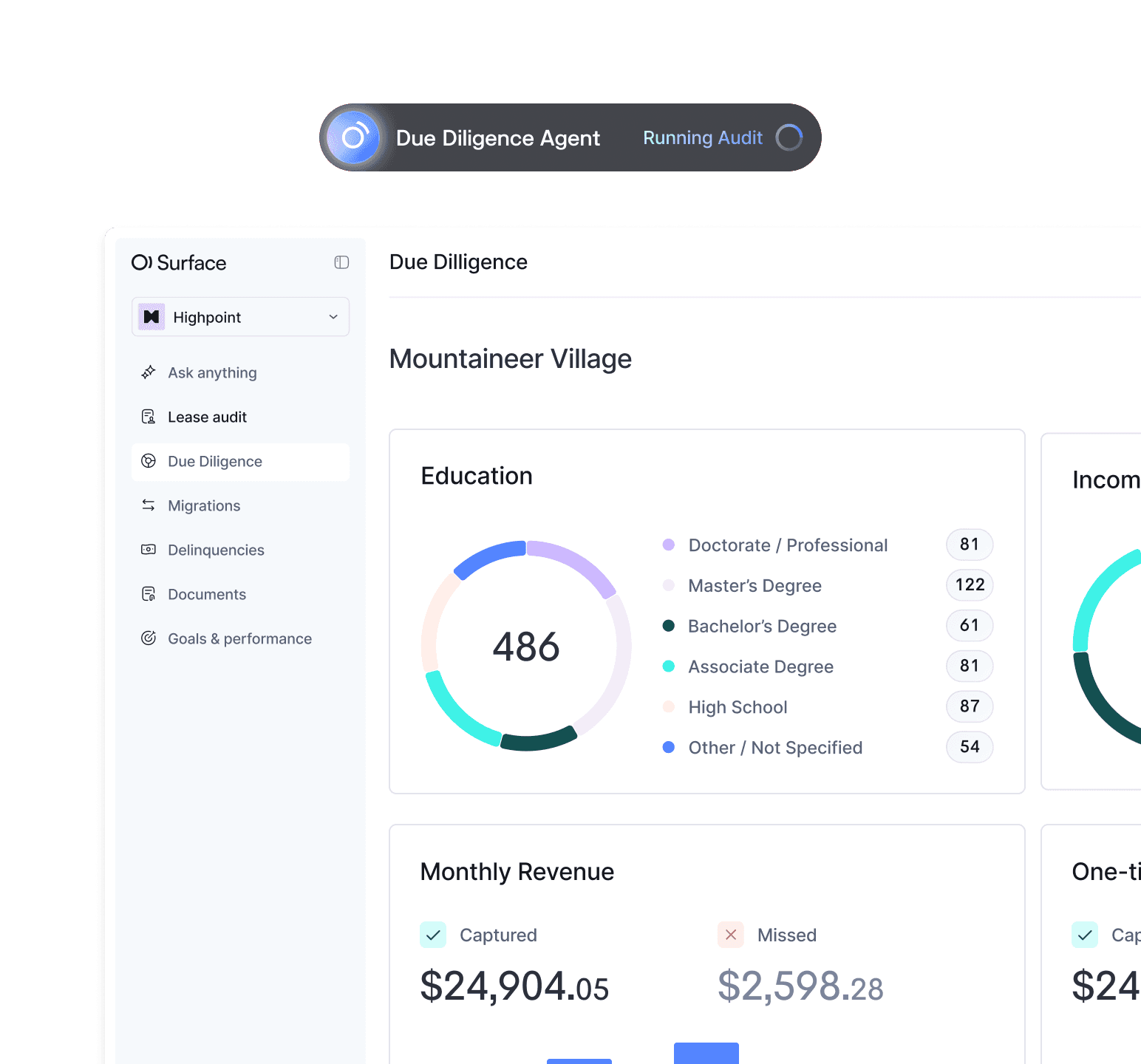
SurfaceAI’s Due Diligence Agent, for example, routes exceptions directly to team members within the same workspace where they manage other property operations. The finding and the action happen in one place.
Why Traditional Deal Analysis Breaks Down
For investors and underwriting teams working under tight timelines, manual deal analysis introduces real risk.
Errors slip through. Discrepancies between rent rolls and lease terms go unnoticed. Unsigned documents surface after closing.
Each of these issues affects net operating income or creates compliance exposure that becomes expensive to resolve.
Why Investors Are Moving Toward AI Property Analysis
The pace of real estate transactions has changed. CBRE forecasts CRE investment activity to reach $562 billion in 2026, and buyers who move slowly lose deals.
At the same time:
- portfolios are larger
- document volume is higher
- manual processes don’t scale
AI compresses timelines from days to hours while improving accuracy.
How AI Improves Real Estate Underwriting
Underwriting requires synthesizing large volumes of structured and unstructured data. AI enhances this process by:
Automating Data Extraction
AI reads lease agreements and financial documents to extract rent terms, escalations, renewals, and obligations, reducing manual effort.
Validating Assumptions
AI compares extracted lease terms against underwriting models to flag mismatches before they impact investment decisions.
Improving Consistency
Unlike manual review, AI applies the same logic across every document, reducing variability in analysis.
Highlighting Risk Patterns
Machine learning models can identify trends or anomalies that warrant deeper review, helping investors focus attention where it matters most.
For a broader view of how this fits into acquisition workflows, see AI due diligence for real estate →
AI, Decision-Making, and Investment Confidence
Beyond speed, AI contributes to better decision quality by improving consistency and reducing cognitive overload in data-heavy environments.
Research on AI-assisted decision-making shows that AI is most effective when used to support human judgment rather than replace it, especially in high-stakes contexts like investing.
(Reference: Harvard Business Review – How AI Can Help Leaders Make Better Decisions Under Pressure →)
This principle directly applies to AI-powered deal analysis in real estate.
Where AI Property Analysis Is Used
Understanding where AI fits into existing workflows helps teams plan implementation and set expectations.
Acquisition Due Diligence and Pre-Close Risk Review
Acquisition teams use financial due diligence tools powered by AI to validate seller-provided data, surface discrepancies, and identify hidden revenue leakage before closing. The goal is confidence that the numbers supporting the purchase price are accurate.
Property Takeovers
Taking over a property means inheriting whatever state it is in. Files are often disorganized. Documentation is incomplete. Resident status is unclear. AI gives incoming management immediate visibility into lease accuracy and resident risk, without spending weeks on manual file review.
This is especially valuable for third-party managers stepping into distressed assets or portfolios left by underperforming operators. The sooner a team understands what it has taken on, the sooner it can act.
24/7 Lease Audit and Compliance Monitoring
Closing a deal does not end the need for real estate deal analysis. The same AI capabilities that drive acquisition due diligence continue to deliver value in daily operations. Lease discrepancies, compliance gaps, and revenue leakage do not stop emerging after close, they require ongoing attention.
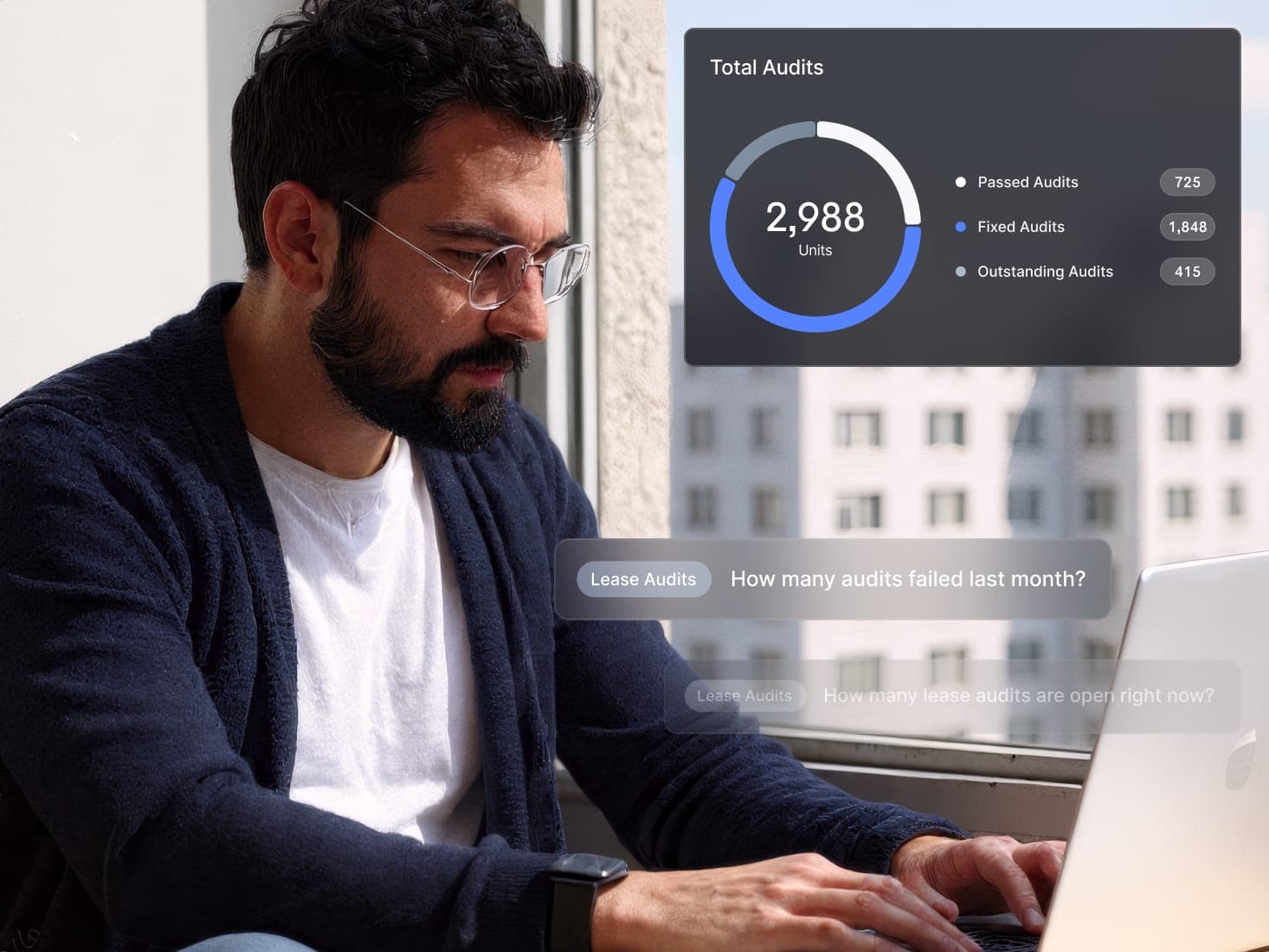
SurfaceAI’s Lease Audit Agent runs in the background at all times. It does not perform a single review and stop. It monitors continuously and surfaces issues as they occur, not weeks later during a scheduled audit.
How SurfaceAI Enhances AI Deal Analysis
SurfaceAI is not a standalone underwriting or valuation platform. Instead, it operates as an AI agent layer that strengthens deal analysis by ensuring accuracy across lease and document data.
SurfaceAI supports investment workflows through:
Lease Accuracy Validation
The Lease Audit Agent reviews executed leases to identify discrepancies between contract terms and underwriting assumptions. Learn more about the Lease Audit AI agent →
Accelerated Acquisition Review
During transactions, the Due Diligence Agent processes large volumes of leases and documents to surface risks early. See how AI due diligence for real estate ↗ supports acquisitions.
Structured Document Intelligence
The Document Management Agent organizes and validates deal documents, ensuring analysts always work from reliable source data.
Together, these agents improve confidence in deal models without disrupting existing systems.

“So much more effective to find issues rather than us dig dig dig - all in one document. The convenience is great”
Ally Goeller
Property Analysis Starts with the Right AI Platform
AI property analysis has moved from novelty to necessity for competitive investors and underwriting teams. According to JLL’s 2026 Global Real Estate Outlook, 88% of investors initiated AI programs in 2025. Yet only 5% say they met most goals. This shows a gap between adoption and effective use.
Automation works better than manual review because data volumes are high, transactions move fast, and missed issues cost more.
Book a demo to see how SurfaceAI’s Due Diligence Agent automates property analysis for multifamily investors.
Frequently Asked Questions about AI Property Analysis

Related content